
Reviewed · WALKING TOURS
Vienna Highlight Tour – yue walk
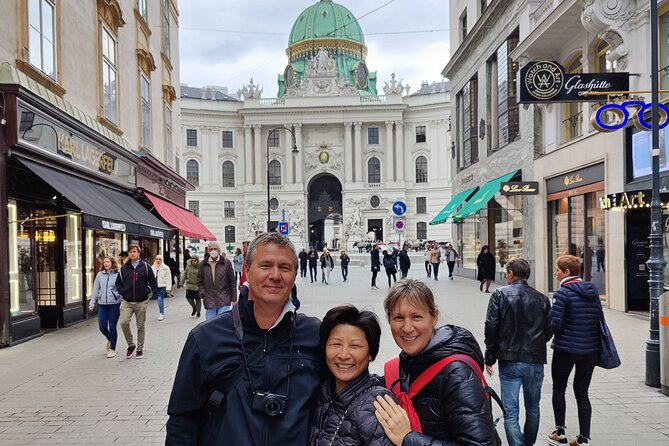
Vienna’s grand center makes sense much faster when someone connects the palaces, churches, monuments, and cafés into one story. This two-hour walk with licensed guide Yue begins at the State Opera and crosses the old imperial heart to St. Stephen’s Cathedral, covering a lot without requiring a full day.
I like the maximum group size of six, which gives you room to ask questions and hear the guide clearly. I also like Yue’s lively style: her humor, historical context, restaurant and sightseeing tips, and willingness to take photos add a personal touch. The tradeoff is pace. At $106.20 per person, this is a costly short tour, and many stops are brief exterior views rather than full museum visits.
In This Review
- Key points at a glance
- Why this short Vienna walk works
- From the Opera to Sacher and Strauss
- Remembering war and fascism
- Lobkowitzplatz and the art of Vienna
- Josefsplatz and the Habsburg court
- Stallburg and the Lipizzaner tradition
- The Hofburg’s inner court
- Heldenplatz and Maria Theresa Square
- Sisi, Michaelerplatz, and the imperial image
- Kohlmarkt, Demel, and the city’s elegant shopping streets
- Graben’s plague column and the final cathedral view
- What the $106.20 price really buys
- Who will enjoy this walking tour most
- Should you book the Vienna Highlight Tour?
- FAQ
- How long is the Vienna Highlight Tour?
- What language is the tour offered in?
- Where does the tour begin?
- Where does the tour end?
- How many people can join the tour?
- Are admission tickets included?
- Can I cancel for a full refund?
Key points at a glance
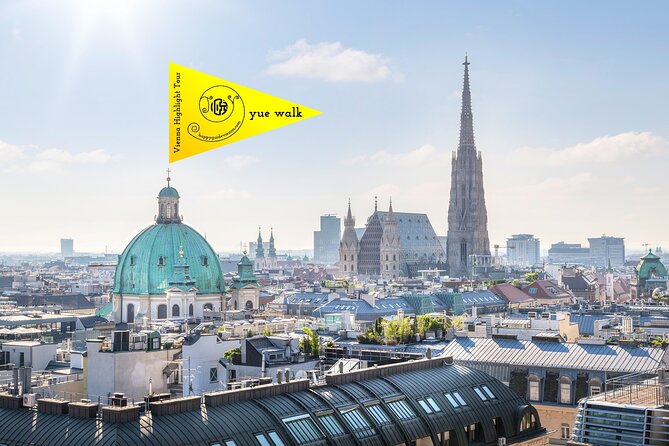
- Imperial Vienna in two hours: Follow the route from the Opera and Hofburg to Heldenplatz, Maria Theresa Square, Graben, and St. Stephen’s Cathedral.
- A genuinely small group: The tour is limited to six people, a major advantage on crowded streets and around busy palace courtyards.
- Yue brings history to life: Expect stories about Habsburg rulers, Sisi, Johann Strauss, court life, architecture, and Vienna’s complicated past.
- Several paid interiors are not included: Tickets for the State Opera, Stallburg, Court Music Chapel, Imperial Treasury, and Sisi Museum are separate.
- Best as an orientation walk: You will see the city’s major landmarks, then can return to the places you want to explore in greater depth.
- Practical starting point: Meet at 10:00 a.m. by Vienna State Opera on Herbert-von-Karajan-Platz and finish near the Stephansplatz U-Bahn station.
Why this short Vienna walk works
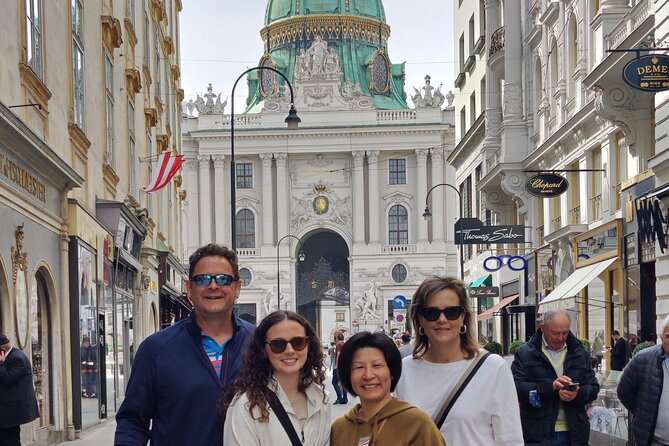
This is not a tour built around one palace or museum. It is a compact introduction to the old center, where the Habsburg court, music, religion, art, politics, war, and café culture all sit within a fairly tight area.
That makes the route useful on your first day. You get a mental map of central Vienna, then you can return to the Hofburg, Sisi Museum, Albertina, or cathedral with a better sense of how each site fits into the city’s story.
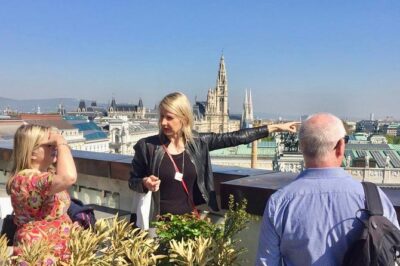
Yue is the guide named for this experience. Her approach combines facts with personal warmth and humor. Several people who booked with her also praised her ability to answer questions, suggest restaurants and other sights, explain connections between buildings, and take group photographs. One particularly useful detail is her attention to the larger European setting, not just isolated dates and names.
The walk is conducted in English. It is suitable for most people, and service animals are allowed. You should still expect two hours on foot, often with short stops rather than long seated explanations.
More walking tours in Vienna:
- Vienna: Guided Walking Tour of City Center Highlights
★ 4.7 · 4,989 reviews - Vienna: Vienna Central Cemetery Guided Walking Tour
★ 4.8 · 3,307 reviews - Vienna: Guided Walking Tour of City Highlights & Hidden Gems
★ 4.9 · 2,180 reviews
From the Opera to Sacher and Strauss
The meeting point is in front of the Vienna State Opera, one of the city’s clearest landmarks. Its Neo-Renaissance building dates from 1869, and it immediately places you in the world of imperial Vienna, high culture, and public ceremony.
The opening stop also brings in two lighter subjects. Palais Todesco is associated with Johann Strauss and the story of how he supposedly stole his first wife. Nearby, Hotel Sacher is tied to Vienna’s famous Sacher Torte, giving you a quick taste of the city’s long relationship with music, aristocratic life, and confectionery.
The opera itself is not included as an admission visit. That is important. You are receiving an exterior introduction and nearby context, not a performance, backstage tour, or full interior visit.
I like beginning here because the Opera is easy to find and close to many later stops. If you want to attend a performance or visit the building properly, treat this walk as your orientation, then arrange a separate ticket.
Remembering war and fascism
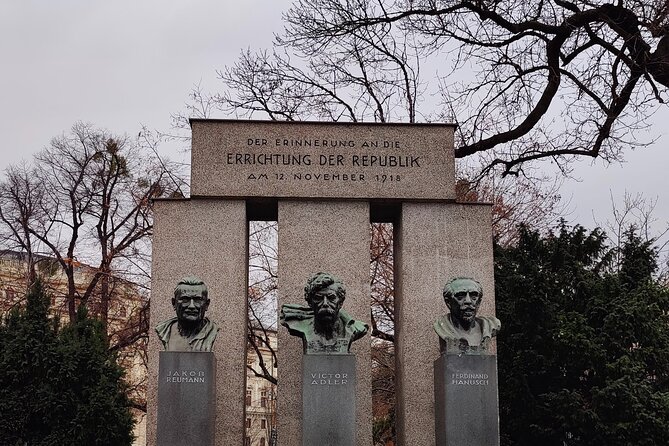
The next stop is the Memorial Against War and Fascism. In only about five minutes, Yue introduces several elements, including the Jewish statue, the Gate of Hell, and the Independence Declaration Stone.
This is one of the route’s most serious moments. Vienna’s imperial beauty can make the past look polished and harmless, so a monument addressing war and fascism adds necessary balance. It reminds you that the city’s story is not only about emperors, elegant façades, and waltzes.
Because the stop is brief, do not expect a long museum-style examination of the memorial. Its value is as a point of reflection within a fast city walk.
Lobkowitzplatz and the art of Vienna
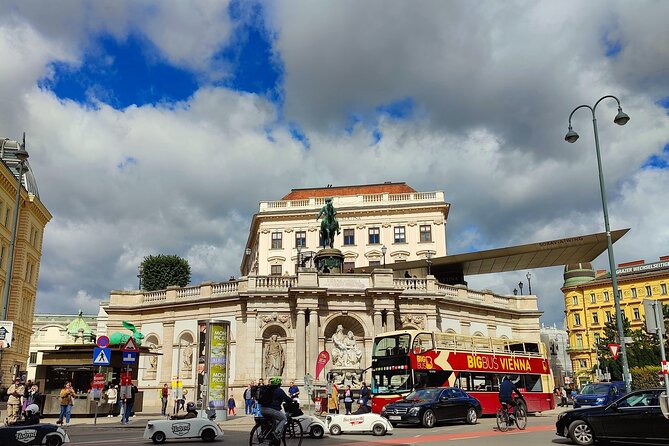
At Lobkowitzplatz, the route gathers several kinds of architecture and culture in one small area. You see the Albertina Palace and Museum, the tower of the Augustinian Church, the Baroque Lobkowitz Palace, and an Art Deco building linked to Otto Wagner.
This is a good example of what the tour does best. Rather than presenting one building in isolation, it lets you compare periods and styles within a few minutes. Vienna’s center is full of this layering. Imperial Baroque, church architecture, modern design, and major art collections all appear side by side.
The Albertina is one of Vienna’s major museums, but admission is not part of the walk. You will get useful orientation from the outside, then can decide if the collection deserves a separate visit.
A different side of Vienna on the same trip:
- Vienna: Vivaldi’s Four Seasons Concert in Karlskirche
★ 4.7 · 14,951 reviews - Vienna: Spanish Riding School Training
★ 3.9 · 9,281 reviews - Vienna: Skip-the-cashier-desk-line Giant Ferris Wheel Ride
★ 4.5 · 7,859 reviews - Vienna: Schönbrunn Palace & Gardens Skip-the-Line Tour
★ 4.7 · 7,739 reviews
Josefsplatz and the Habsburg court
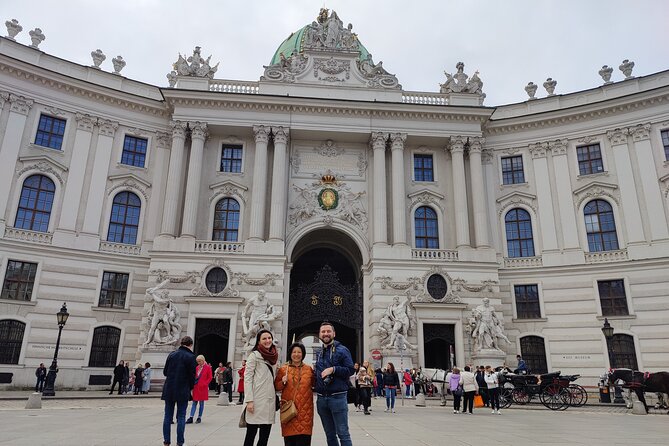
Josefsplatz is a concentrated look at the court world. The route includes the Augustinian Church, with an inside visit, as well as the statue of Emperor Joseph II, the Court Library, Pallavicini Palace, and the Spanish Riding School.
The Augustinian Church gives you a chance to step indoors during a route that otherwise includes many exterior views. The church also helps explain the close relationship between the Habsburg family and religious ceremony.
The Court Library, now part of the Austrian National Library, is one of the area’s great architectural highlights. The route identifies it from outside, so plan a separate visit if you want to see its famous interior.
The Spanish Riding School is another major draw. Its Lipizzaner horses are part of Vienna’s court tradition, but this tour does not include a performance or riding-school admission. That distinction matters if the horses are your main reason for booking.
Stallburg and the Lipizzaner tradition
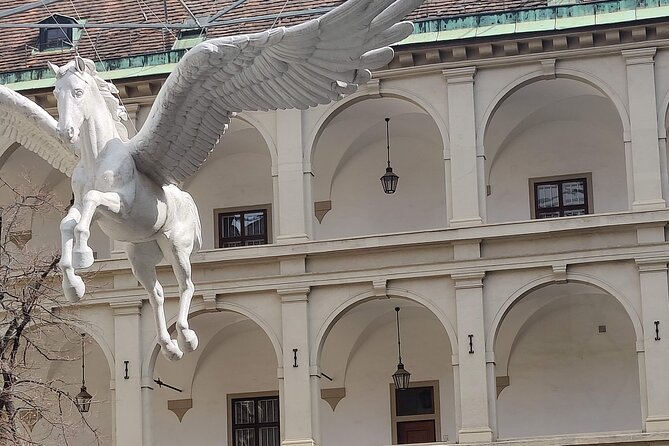
The short stop at Stallburg focuses on the Lipizzaner horses. This is a quick look at one of Vienna’s most recognizable living traditions.
You may see the connection between the building and the horses, but a proper visit to the Spanish Riding School or Stallburg requires a separate ticket. The route is better for learning where these institutions are and why they matter than for spending time with the horses.
If you are hoping for an extended horse visit, do not count on this walk alone. Use the stop to plan a return visit.
The Hofburg’s inner court
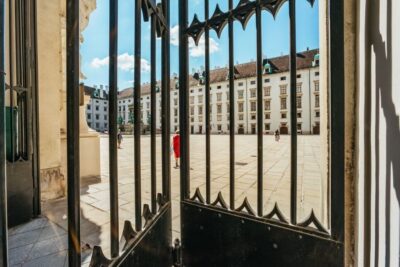
The Hofburg is the center of the imperial section of the walk. In the Inner Court, Yue points out the statue of Franz II/I and the Amalien Wing, Leopoldinischer Wing, and Reichskanzlei Wing.
The Hofburg can seem confusing when you first arrive. It is a large complex rather than one simple palace, and the different wings reflect changing rulers, functions, and building periods. A guide helps turn a collection of grand façades into a readable map.
This is also where the stories of power become more personal. The route leads naturally toward Sisi-related sites, court apartments, the treasury, and the chapel. You are not simply seeing a palace. You are tracing how the imperial household worked and how its public image was built.
The Hofburg exterior areas on this walk are free to see. Admissions to the museums within the complex are not included.
Heldenplatz and Maria Theresa Square
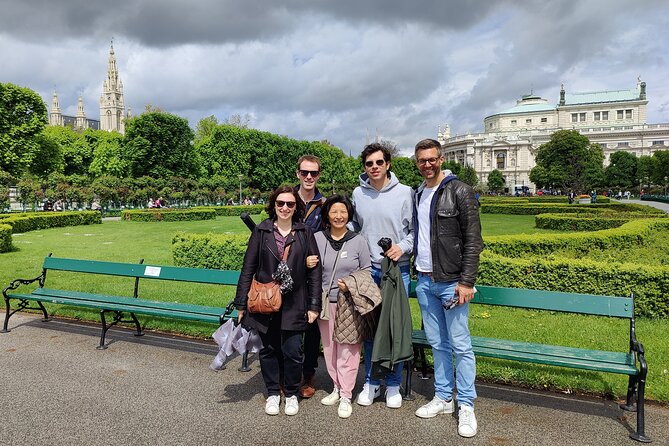
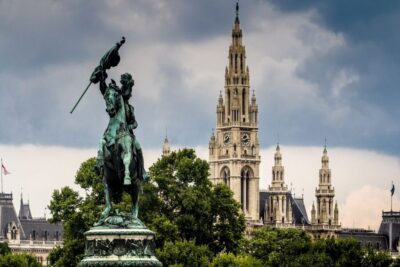
Heldenplatz opens the scale of imperial Vienna. The square includes statues of Karl and Prince Eugen, the Burgtor, and views toward the National Library, OSCE offices, City Hall, and Parliament.
This is an excellent place to pause and understand Vienna as a political capital. The broad open space was designed for ceremony and power, and its buildings continue to frame public life today.
Maria Theresa Square shifts the focus from military and imperial authority to one of the Habsburg monarchy’s most important rulers. Yue discusses Maria Theresa, her role as the most powerful female ruler of the Habsburg dynasty, and how her decisions changed the course of European history.
Her large statue is surrounded by the Museum of Art History and the Museum of Natural History. The tour does not take you inside, but it gives you enough context to choose intelligently between them later. If you enjoy art, archaeology, or natural science, this is a place where the walk may prompt a second visit.
Sisi, Michaelerplatz, and the imperial image
The Sisi Museum is the route’s main stop for Empress Elisabeth, better known as Sisi. Yue focuses on Sisi’s personality, her difficult position within the Habsburg court, and the way she became an Austrian icon after her death.
The stop lasts about ten minutes, and admission is not included. That means you should think of it as an introduction, not a museum tour. If Sisi interests you, set aside separate time for the exhibits.
Michaelerplatz follows with a mix of old and new. You see Michaelerkirche, the Michaeler Gate, the Loos House, and archaeological excavations. The square is useful because it shows how Vienna’s center contains Roman remains, imperial entrances, historic churches, and modern architecture in one view.
The Loos House is especially helpful for understanding Vienna’s architectural tensions. It looks very different from the ornate imperial buildings nearby, so you can see the city’s move toward modern design without leaving the old center.
Kohlmarkt, Demel, and the city’s elegant shopping streets
Kohlmarkt brings you into Vienna’s luxury shopping district. The route points out Café Demel and the splendid buildings along the street.
Demel is one of the city’s best-known historic confectioners, making this another good place to connect food with social history. As with Sacher Torte near the Opera, the point is not just dessert. Vienna’s cafés and pastry shops are part of how the city’s public life developed.
The shopping streets are attractive, but they can also be busy. Since the group is capped at six, you have a better chance of staying together than you would with a large walking crowd. Still, listen closely at street crossings and be prepared for a moving route rather than a quiet lecture.
Graben’s plague column and the final cathedral view
At the Pestsäule, or Plague Column, Yue introduces one of Vienna’s most recognizable Baroque monuments. Nearby sights include Grabenhof and Ankerhaus.
The column is a reminder that the city’s grandest streets also carry memories of disease, fear, religion, and survival. It is another moment when the tour moves beyond postcard beauty and gives the center a more human scale.
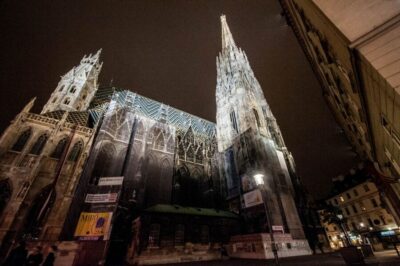
The final stop is St. Stephen’s Cathedral, or Stephansdom. The present building developed from the 12th through the 16th centuries, and its south tower is the tallest tower in Vienna’s central area.
Five minutes is enough to admire the exterior and get your bearings, but not enough for a full cathedral visit. You finish near the Stephansplatz U-Bahn station, looking toward the highest south tower. That location is practical for continuing your day, using public transportation, or returning to the cathedral on your own.
What the $106.20 price really buys
At $106.20 per person, this is not a bargain-priced city orientation. The cost makes more sense if you value a small group, a licensed English-speaking guide, and a focused route through many major sights.
The group limit of six is the strongest value point. Large Vienna walking tours can make it hard to hear, ask questions, or stay connected with the guide. Here, you get a more personal format, and the feedback about Yue repeatedly emphasizes her humor, energy, photo help, and practical recommendations.
The price does not cover entry to several important interiors. Separate admission is required for the State Opera, Stallburg, the Imperial Treasury, the Court Music Chapel, and the Sisi Museum. The Augustinian Church is listed as an inside visit, while many other stops are exterior explanations.
For a first visit, the walk can save you time and help you avoid wandering past important buildings without understanding them. For someone who already knows central Vienna, the short duration and basic route may offer less value.
Who will enjoy this walking tour most
I would choose this tour if you are visiting Vienna for the first time, have only a short stay, or want a clear introduction before tackling the museums. It also suits families, since Yue has been praised for working well with children and keeping the history lively.
It is a good fit for people who enjoy stories about rulers, court personalities, architecture, and the connections between buildings. You should also appreciate walking at a brisk pace and seeing many places from the outside.
I would be more cautious if you want long museum visits, extensive time inside churches, or a slow photographic walk. The itinerary covers fourteen listed stops in roughly two hours, so the experience is necessarily a whirlwind.
Book for 10:00 a.m. at Herbert-von-Karajan-Platz by the State Opera. Confirmation arrives at booking, the meeting point is near public transportation, and free cancellation is available until 24 hours before the start. The experience requires good weather, with another date or a full refund offered if poor weather causes cancellation.
Should you book the Vienna Highlight Tour?
Book it if you want a personal, story-driven introduction to central Vienna and value a group of no more than six. Yue’s style appears especially suited to people who want history explained with humor, context, and practical suggestions for the rest of their stay.
Do not book it expecting a series of full interior visits. At $106.20, the cost is high for two hours, and paid admissions are separate. But if you use the walk as your first-day map, then return to the Hofburg, Sisi Museum, Albertina, museums, or cathedral afterward, it can give your Vienna visit a stronger shape.
One isolated poor experience raised concerns about language clarity and factual accuracy during a last-minute German request, while the tour itself is offered in English. That makes the language choice worth noting. For an English-speaking visitor seeking a compact overview with a warm guide and plenty of imperial context, this is a strong pick.
FAQ
How long is the Vienna Highlight Tour?
The tour lasts approximately two hours.
What language is the tour offered in?
The tour is offered in English.
Where does the tour begin?
It begins at Herbert-von-Karajan-Platz by the Vienna State Opera, at 1010 Vienna.
Where does the tour end?
It ends at the Wien Museum Virgilkapelle area near the Stephansplatz U-Bahn station in central Vienna, overlooking the highest south tower.
How many people can join the tour?
The tour has a maximum of six travelers.
Are admission tickets included?
The licensed guide is included, but admission is not included for the Vienna State Opera, Stallburg, the Court Music Chapel, the Imperial Treasury Museum, or the Sisi Museum. The itinerary lists free admission for several other stops, including the Augustinian Church and Hofburg areas.
Can I cancel for a full refund?
Yes. You can cancel at least 24 hours before the experience start time for a full refund. Cancellations or changes made less than 24 hours before the start are not refunded or accepted. If poor weather cancels the tour, you will be offered another date or a full refund.
Just added around Vienna
- Private Tour from Vienna to Melk and Dürnstein★ 4.5 · 3 reviews
- Vienna: Johann Strauss 200th birthday anniversary exhibition★ 4.7 · 3 reviews
- Vienna Private Full Day Tour – Tickets to Schönbrunn & Lunch★ 5.0 · 3 reviews
- Private Salzburg Day Trip from Vienna★ 4.0 · 3 reviews
- Vienna: Entry Ticket Belvedere 21 & Contemporary Art★ 4.3 · 3 reviews
- Full-Day Private Trip from Vienna to Budapest★ 4.5 · 3 reviews
- Vienna by Night: Private Evening Food and Drink Tour★ 5.0 · 3 reviews
- 1.5 Hour Cinematic Style Portrait Photoshoot and Tour in Vienna★ 4.5 · 3 reviews
Walking Tours, compared.
Guided Walking Tour of City Center Highlights
Read our review →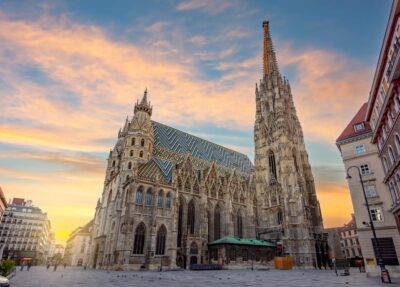
Guided Walking Tour of City Highlights & Hidden Gems
Read our review →
Vienna Historic Center Small Group Walking Tour
Read our review →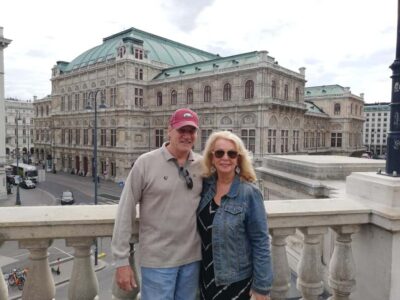
Ghosts and Legends Guided Nighttime Walking Tour
Read our review →Browse the lists this tour appears in