
Reviewed · WALKING TOURS
Vienna: Highlights Walking Tour with a Local Guide
Vienna’s grand center is best understood on foot, and this tour gives you a tidy introduction to its imperial palaces, broad Ringstrasse, and handsome public squares. You’ll move from Maria-Theresien-Platz to the Hofburg, Burgtor, Kunsthistorisches Museum, and other major sights in three hours.
I like the compact route because it covers a lot without sending you across the city, and I like the chance to hear the stories behind Vienna’s buildings rather than simply photograph their façades. Guides including Gulam, Nathalie, and Hugo have brought humor, food tips, and strong historical context to the walk.
The main concern is the language availability. English is offered, along with French and Spanish, but Spanish-language bookings have sometimes faced guide shortages and late cancellations. Confirm your language before you commit, especially if not everyone in your group speaks English.
In This Review
- Key points at a glance
- Why this three-hour walk works in Vienna
- Maria-Theresien-Platz puts imperial Vienna on display
- Neue Burg and the Hofburg reveal the seat of power
- Ringstrasse turns old defenses into a civic boulevard
- Burgtor marks Vienna’s military past
- Kunsthistorisches Museum rewards an exterior visit
- St. Michael’s Church adds an older, quieter note
- The guide can shape the whole experience
- Walking comfort, access, and timing
- Who should book this Vienna walk?
- Should you book it?
- FAQ
- How long is the Vienna highlights walking tour?
- Where does the tour begin?
- What sights are included?
- Is the tour conducted in English?
- Is a private tour option available?
- Is the walking tour wheelchair accessible?
- Can I cancel for a refund?
Key points at a glance
- Maria-Theresien-Platz gives you two major museums, a grand imperial statue, and a clear introduction to Vienna’s baroque style.
- Ringstrasse connects several of the city’s important public buildings in one walk, including City Hall, Parliament, Burgtheater, and the Vienna State University area.
- Burgtor and Heldenplatz explain how Vienna moved from fortified medieval city to imperial capital.
- The Hofburg and Neue Burg put you at the center of Habsburg power, ceremony, and culture.
- St. Michael’s Church adds an older, more intimate stop after the monumental architecture.
- A live guide matters here, since the value comes from context, anecdotes, and answers to your questions rather than admission to museum interiors.
Why this three-hour walk works in Vienna
Vienna can feel polished to the point of being hard to read. You see palaces, statues, museums, and wide streets, but the city’s story is easier to grasp when someone links the pieces together. This walk focuses on the imperial core, where a short distance takes you from medieval defenses to Habsburg ceremony and then to nineteenth-century civic architecture.
The starting point is Babenbergerstraße 9. From there, you can expect a steady walk through central Vienna, with stops for explanation, photographs, and sightseeing. The listed timing gives about 30 minutes to each major part of the route, though the exact pace may vary with the group, questions, and the guide’s approach.
At $38 per person, the tour is reasonably priced for three hours with a live guide. You are paying mainly for orientation and interpretation, not for entry into the museums or palaces. That makes it good value if this is your first time in Vienna or if you want the city’s central sights explained in one sitting.
If you already know the Hofburg, Ringstrasse, and Maria-Theresien-Platz well, the value is less certain. In that case, you may prefer to spend the money on a museum ticket or explore at your own pace. For a first look, though, a guided route helps you avoid wandering past major buildings without understanding why they matter.
More walking tours in Vienna:
- Vienna: Guided Walking Tour of City Center Highlights
★ 4.7 · 4,989 reviews - Vienna: Vienna Central Cemetery Guided Walking Tour
★ 4.8 · 3,307 reviews - Vienna: Guided Walking Tour of City Highlights & Hidden Gems
★ 4.9 · 2,180 reviews
Maria-Theresien-Platz puts imperial Vienna on display
Maria-Theresien-Platz is one of the strongest openings for a Vienna city walk. The square is framed by the Natural History Museum and the Art History Museum, two matching buildings that face one another across the open space. Between them, a large statue honors Empress Maria Theresa.
This arrangement tells you a lot about Vienna before the guide says much at all. The square was planned to express imperial order, learning, and power. The museums are not tucked away on side streets. They form part of a grand urban setting designed to make the Habsburg capital feel important.
I would pay attention to the contrast between the square’s open scale and the detail on the museum façades. You get a good sense of Vienna’s baroque and imperial style without having to enter either museum. The guide can also explain how Maria Theresa shaped the city and the wider Habsburg realm, giving the statue more meaning than it has as a simple photo stop.
The limitation is that this portion is exterior sightseeing. Your tour does not include a museum visit, and 30 minutes is not enough to explore the collections inside. If you want Bruegel, Velázquez, Egyptian artifacts, or the Natural History Museum’s displays, plan a separate visit.
Neue Burg and the Hofburg reveal the seat of power
The route continues into the Hofburg area, including Neue Burg. This is the formal heart of Vienna, a place where architecture, government, ceremony, and royal life overlap. The Hofburg is not one single palace with one neat entrance. It grew over time, and its different wings reflect changing needs and periods.
Neue Burg gives the complex a particularly grand face. The curved façade and broad open setting make it easy to understand why the area was built to impress. Your guide can help you read the buildings as parts of a working imperial center rather than treating them as a single palace backdrop.
The Hofburg stop is useful because it connects the city’s visual grandeur to political history. The Habsburg rulers governed a large central European realm from here, and the complex later became part of modern Austria’s public life. You are walking through a place that has carried several roles, not just admiring a pretty building.
Keep your expectations clear: the tour offers a guided visit and sightseeing around the area, but the supplied details do not promise entry into every Hofburg interior. If you want palace rooms or a museum collection, ask at booking what the selected option includes. The exterior route still gives you a strong orientation to the complex.
Ringstrasse turns old defenses into a civic boulevard
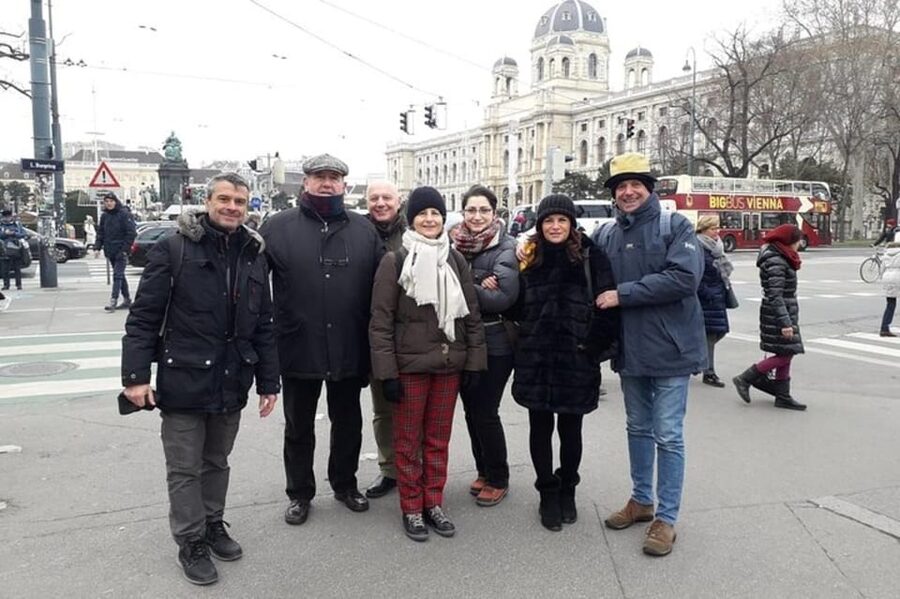
Ringstrasse is one of the most important ideas on the walk. The boulevard follows the line of Vienna’s former medieval fortifications, but the walls were removed and the space was rebuilt with grand public buildings. This change reflects Vienna’s growth from a defended medieval center into a modern imperial capital.
Along the route, you’ll encounter major buildings such as City Hall, Parliament, the Burgtheater, and the Vienna State University area. Each one uses a different architectural language, which is part of the fun. Vienna did not stick to one style. Its public buildings borrowed from classical Greece, Rome, Gothic traditions, and other historical models.
That variety can seem confusing if you walk the boulevard alone. A guide gives you a way to sort it out. Instead of seeing a row of impressive façades, you begin to understand the political message behind them. Parliament suggests civic government, the Burgtheater points to high culture, and City Hall expresses municipal pride.
Ringstrasse is also where the walking format makes sense. You can see how the buildings relate to one another, how much space the boulevard creates, and how the city’s old edge became a public showcase. A bus ride would cover the same ground faster, but you would lose the scale and detail that make the street interesting.
A few more Vienna tours worth weighing up
- Vienna Spanish Riding School Guided Tour
★ 4.7 · 6,765 reviews - Vienna: Bus & Schönbrunn Palace Skip-the-Line Guided Tour
★ 4.3 · 2,802 reviews - Vienna: Tickets for Mozarthaus Vienna with Audio Guide
★ 4.2 · 2,344 reviews - Vienna: Viennese Underworld Guided Walking Tour
★ 4.7 · 1,865 reviews
Burgtor marks Vienna’s military past
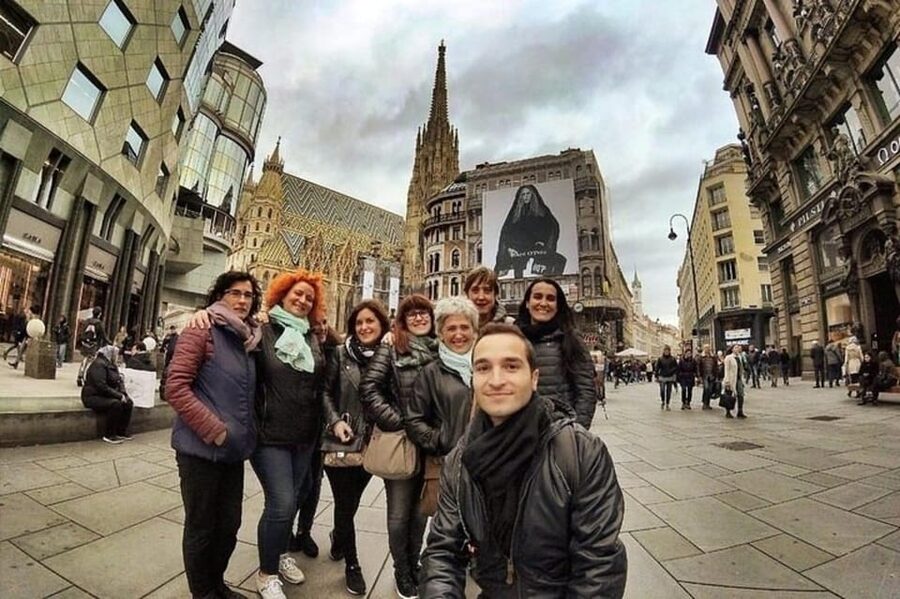
Burgtor is a neoclassical arch near the Hofburg and Heldenplatz. It once formed part of Vienna’s defensive system, and its later design commemorates the defeat of Napoleon by Vienna and its allies. The stop brings military history into a route otherwise filled with palaces and museums.
Look at Burgtor as a symbol of changing priorities. Fortifications were built to keep armies out. Later, the same part of the city was given a monumental public face, intended to honor victory and imperial power. The guide can tie this shift to the wider story of Vienna’s changing walls and expanding streets.
This is a good photo stop, but it is also a place where a short explanation adds real value. Without context, an arch can look like just another handsome classical structure. With context, it becomes a marker of war, defense, commemoration, and the city’s public memory.
Kunsthistorisches Museum rewards an exterior visit
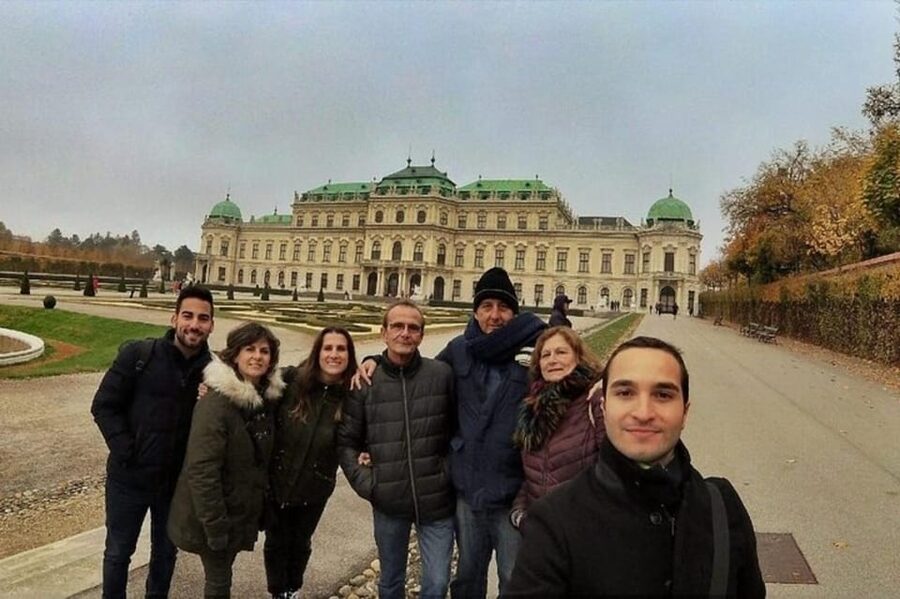
The Kunsthistorisches Museum is one of the city’s major cultural buildings, housed in a palatial structure near Maria-Theresien-Platz. Even if your walking tour does not include admission, the exterior helps explain how the Habsburg rulers presented their collections and status.
The museum’s location matters. It is part of the grand urban composition with its matching neighbor, the Natural History Museum. Together, the buildings create a setting that links science, art, monarchy, and public education.
Your guide can point out the museum as more than a stop for photographs. It represents the collecting habits of the royal family and the effort to give those collections a monumental home. That context makes a later museum visit more rewarding, since you already understand the building’s place in the city.
The practical drawback is simple: three hours goes quickly, and the route only gives you a taste of the museum from outside unless your specific booking says otherwise. If art is a main reason for your Vienna visit, reserve separate time for the interior.
St. Michael’s Church adds an older, quieter note
St. Michael’s Church is one of Vienna’s oldest churches and a useful contrast to the grand nineteenth-century buildings along Ringstrasse. Its Romanesque roots reach back much further than the imperial façades that dominate the center, reminding you that Vienna was already an established city before the Habsburgs reshaped it.
The church is associated with the Hofburg area, so it fits naturally into the route. After the open squares and large public buildings, a church stop brings the scale down. You can consider how religion, court life, and ordinary urban life occupied the same central district over many centuries.
This is one of the stops where your guide’s explanation is especially helpful. A church can be difficult to interpret from the outside, and the supplied details do not specify how long you spend inside. Treat it as a chance to learn about Vienna’s older layers, not as a full church tour.
The guide can shape the whole experience
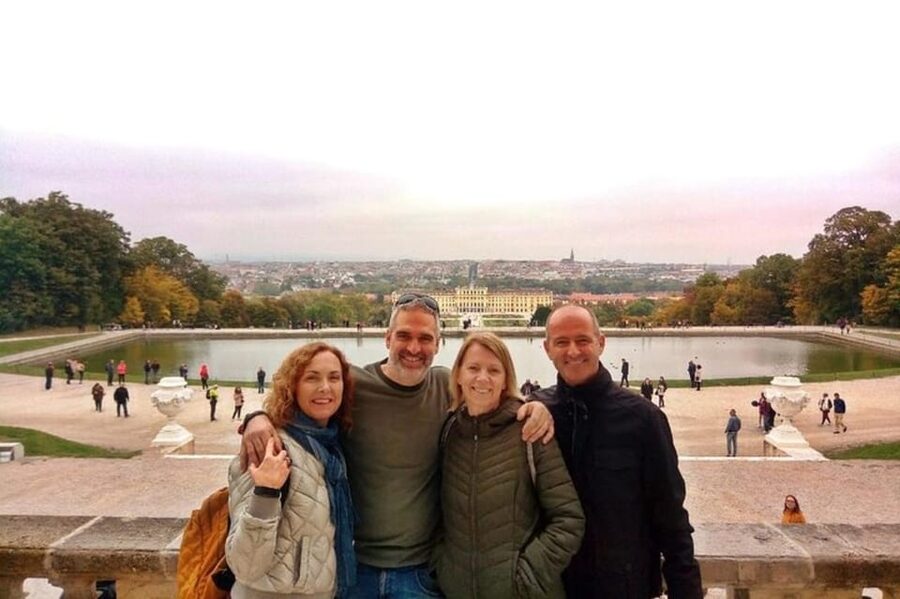
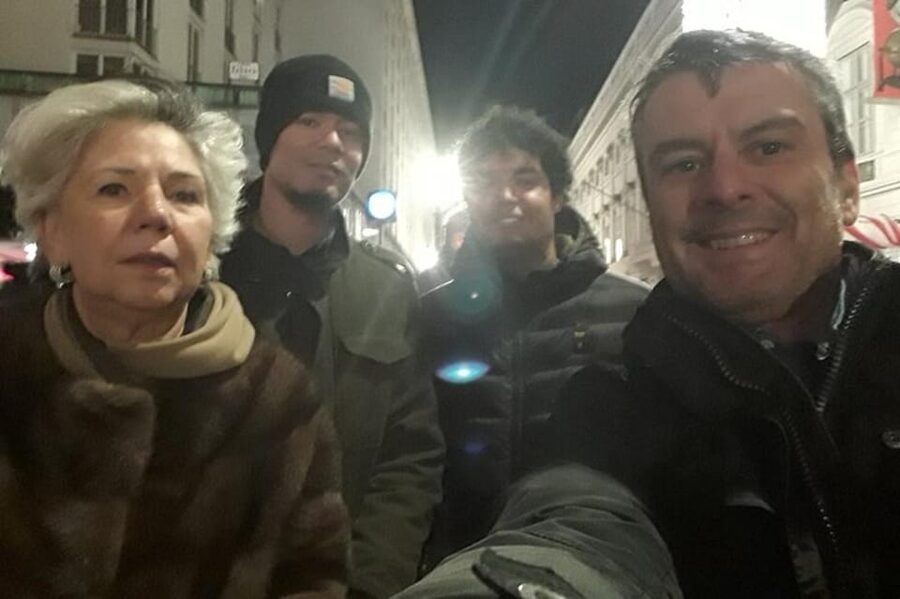
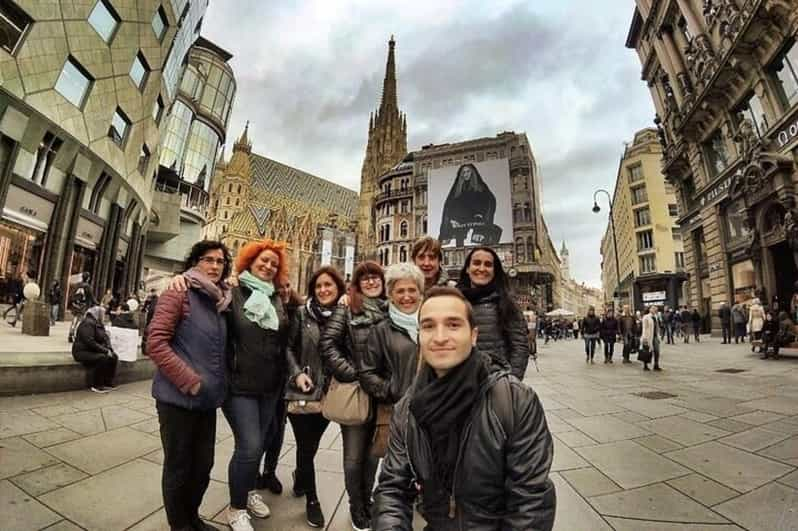
A walking tour is only as good as the person leading it. The strongest guide descriptions point to clear explanations, humor, and a willingness to answer questions. Gulam has been described as informative and funny, with a strong grasp of Vienna’s story. Nathalie has brought history, culture, food, and personal enthusiasm to the route. Hugo has mixed humor with practical suggestions for cafés and restaurants.
Those details matter because the stops themselves are free to see. You are buying the guide’s ability to connect them. A good guide can explain why a square looks the way it does, place a palace in political context, and help you remember the difference between Vienna’s architectural periods.
The experience may feel different in a private group than in a shared group. A private option gives your party more room to ask questions and set the pace, while a group tour can be more social and may keep to a firmer rhythm. The available languages are English, French, and Spanish.
Language deserves special attention. Spanish-language bookings have had problems when no Spanish-speaking guide was available, including cancellations close to the tour date. If your group needs Spanish, confirm that the language is secured rather than assuming the general language listing guarantees it. If that cannot be confirmed, this may not be the right booking for your party.
Walking comfort, access, and timing
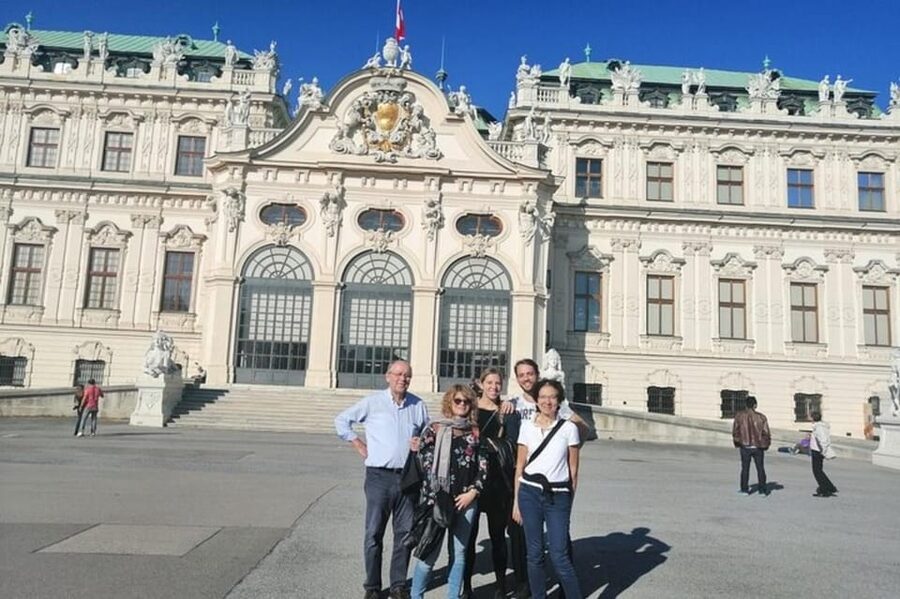
The tour lasts three hours and takes place on foot through central Vienna. You should be ready for a sustained walk with repeated stops, though the supplied information does not give an exact distance. Comfortable shoes are a sensible choice, particularly because the route links several squares, boulevards, palace areas, and church surroundings.
The activity is listed as wheelchair accessible. That is useful for many visitors, but central historic areas can still involve varied surfaces, crowds, or narrow approaches around individual buildings. If your group has specific mobility needs, confirm the practical route details with the provider before booking.
Starting times vary, so check availability when selecting your date. The meeting point is Babenbergerstraße 9, and the tour ends at the final sights on the route rather than returning to the starting point. Since the walk stays in central Vienna, you can continue sightseeing afterward, though the exact end point should be confirmed with your guide.
Free cancellation up to 24 hours before the activity and the option to reserve now and pay later make this easier to fit into a changing schedule. Those policies are useful, but they do not solve the language issue, so check that first if it is important to your group.
Who should book this Vienna walk?
I would recommend it most strongly to first-time visitors, short-stay visitors, and anyone who wants the imperial center explained before choosing which museums to enter. The route gives you a useful mental map of Maria-Theresien-Platz, the Hofburg, Ringstrasse, Burgtor, and Heldenplatz.
It also suits people who enjoy architecture but do not want a lecture packed with dates. The mix of imperial stories, military history, art, public buildings, church history, and food suggestions gives the walk some variety.
Families and mixed-interest groups may appreciate the humor and short sightseeing segments, especially with a guide such as Hugo or Gulam. A private option may be worth considering if your group has children, mobility concerns, or many questions.
I would be more cautious if you want extensive interior visits, a specialist art tour, or a guaranteed Spanish-speaking guide without confirming availability. The walk is an overview, not a museum program or a deep study of Habsburg history.
Should you book it?
Book this tour if you want a well-organized first look at Vienna’s central sights and value a human guide to explain the grand architecture. At $38, three hours is a fair exchange for orientation, historical context, and the chance to ask questions as you walk.
Skip it if you prefer slow independent sightseeing or already know the imperial center. For Spanish-speaking groups, confirm the guide language before paying. For everyone else, this is a practical way to get your bearings fast, with enough variety to keep the walk interesting from Maria-Theresien-Platz to the Hofburg and St. Michael’s Church.
FAQ
How long is the Vienna highlights walking tour?
The tour lasts three hours.
Where does the tour begin?
Meet your guide at Babenbergerstraße 9 in Vienna.
What sights are included?
The route includes Neue Burg and the Hofburg area, Burgtor, Kunsthistorisches Museum, Ringstrasse, and Maria-Theresien-Platz. The experience also includes sightseeing around Heldenplatz and St. Michael’s Church.
Is the tour conducted in English?
Yes. Live guides are available in English, French, and Spanish.
Is a private tour option available?
Yes. You can select a private group option, depending on availability and the booking choice.
Is the walking tour wheelchair accessible?
Yes, the activity is listed as wheelchair accessible.
Can I cancel for a refund?
You can cancel up to 24 hours in advance for a full refund. The activity also offers a reserve-now-and-pay-later option.
Just added around Vienna
- Private Tour from Vienna to Melk and Dürnstein★ 4.5 · 3 reviews
- Vienna: Johann Strauss 200th birthday anniversary exhibition★ 4.7 · 3 reviews
- Vienna Private Full Day Tour – Tickets to Schönbrunn & Lunch★ 5.0 · 3 reviews
- Private Salzburg Day Trip from Vienna★ 4.0 · 3 reviews
- Vienna: Entry Ticket Belvedere 21 & Contemporary Art★ 4.3 · 3 reviews
- Full-Day Private Trip from Vienna to Budapest★ 4.5 · 3 reviews
- Vienna by Night: Private Evening Food and Drink Tour★ 5.0 · 3 reviews
- 1.5 Hour Cinematic Style Portrait Photoshoot and Tour in Vienna★ 4.5 · 3 reviews
Walking Tours, compared.
Guided Walking Tour of City Center Highlights
Read our review →
Guided Walking Tour of City Highlights & Hidden Gems
Read our review →
Vienna Historic Center Small Group Walking Tour
Read our review →
Ghosts and Legends Guided Nighttime Walking Tour
Read our review →Browse the lists this tour appears in