
Reviewed · HISTORICAL TOURS
Vienna: History Highlight Walking Tour
Vienna’s imperial center is best understood on foot, and this tour connects the grand facades with the people, politics, and odd customs behind them. In two hours, you move from Roman remains and Habsburg palace grounds to wartime memorials and the roof of St. Stephen’s Cathedral.
I like the small-group format, which gives guides such as Herbert and Wolfgang room to answer questions and adjust the pace. I also like the mix of major sights and surprising details, from why a bridegroom sometimes missed his own Habsburg wedding to what once occupied the site of Hotel Sacher.
The main limitation is the brisk two-hour schedule. You see many places from outside, but entrance fees are not included, and several stops call for a return visit. The route is also not suited to people with mobility impairments or children under 12.
In This Review
- Key points to know before booking
- Why this two-hour walk works well in Vienna
- Starting at Michaelerplatz and the Roman remains
- St. Michael’s Church and the Habsburg court
- Heroes’ Square and the Imperial Treasury
- The Austrian National Library and Joseph II Square
- Habsburg weddings and a closed Sunday stop
- Albertina, wartime Vienna, and the State Opera
- Neuer Markt and the Imperial Crypt
- Finishing at St. Stephen’s Cathedral
- Guide style, group size, and pace
- What is included and what is not
- Who should book this Vienna history tour?
- FAQ
- How long is the Vienna History Highlight Walking Tour?
- Where does the tour start?
- How close is the meeting point to public transportation?
- Which languages are available?
- Is the tour suitable for children?
- Are entrance fees included?
- Does the tour operate in bad weather?
- Can I cancel for a refund?
Key points to know before booking
- Roman Vienna begins the story: The tour starts at Michaelerplatz, where excavations introduce the city’s earliest urban layer.
- The Hofburg gets human context: Palace courtyards and Heroes’ Square become easier to understand through stories about the rulers who used them.
- Several top sights are exterior visits: You pass the Imperial Treasury, National Library, Albertina, Imperial Crypt, and State Opera without admission included.
- Herbert is a frequent guide: His humor, historical images, and practical museum tips are repeatedly praised in the supplied feedback.
- The route ends at Vienna’s landmark cathedral: St. Stephen’s Cathedral provides a strong finish and a useful point for continuing your sightseeing.
- Weather matters: The walk operates in all weather, so wear shoes and clothing suited to the forecast.
Why this two-hour walk works well in Vienna
Vienna can feel easy to visit and hard to read. The center is full of grand buildings, statues, domes, and formal squares, yet the meaning behind them is not always obvious when you walk past alone. This tour gives you a story line.
The path covers the old imperial core rather than trying to show every district in the city. That makes it useful on a first visit, especially if you want a quick orientation before choosing museums, palaces, or churches to visit in greater depth.
At $33 per person, the value rests mainly in the guide. You are not paying for entry to a museum or a special performance. You are paying for two hours of explanation, route planning, historical connections, and the chance to notice details you might otherwise miss.
That is a fair price for a small-group walking tour if you enjoy history and ask questions. It is less appealing if you want extended indoor visits or a slow photography walk.
More walking tours in Vienna:
- Vienna: Guided Walking Tour of City Center Highlights
★ 4.7 · 4,989 reviews - Vienna: Vienna Central Cemetery Guided Walking Tour
★ 4.8 · 3,307 reviews - Vienna: Guided Walking Tour of City Highlights & Hidden Gems
★ 4.9 · 2,180 reviews
Starting at Michaelerplatz and the Roman remains
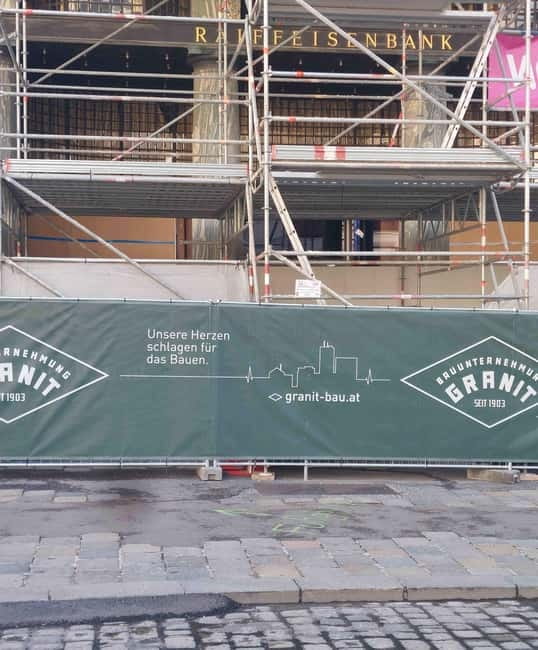
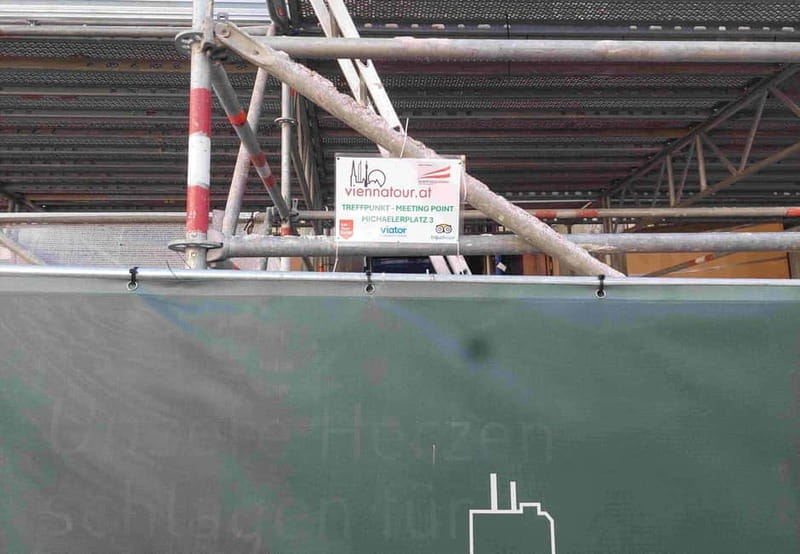
The meeting point is in front of Loos Haus at Michaelerplatz 3, near the facade carrying the name Raiffeisenbank. It is about a three-minute walk from Herrengasse station on the U3 metro line, with the building located between Kohlmarkt and Herrengasse.
This is a useful starting place because Michaelerplatz brings several layers of Vienna together in one view. The tour begins with Roman Vienna and the reason a castle was built here, then turns to the excavated remains in the square.
You should arrive with the location details saved on your phone. Michaelerplatz is central and easy to reach, but a large city square can be confusing when you are looking for one specific facade.
The excavation stop is guided rather than a long archaeological visit. Think of it as a quick lesson in how the modern imperial center grew from earlier settlements. It gives the rest of the walk a stronger foundation.
St. Michael’s Church and the Habsburg court
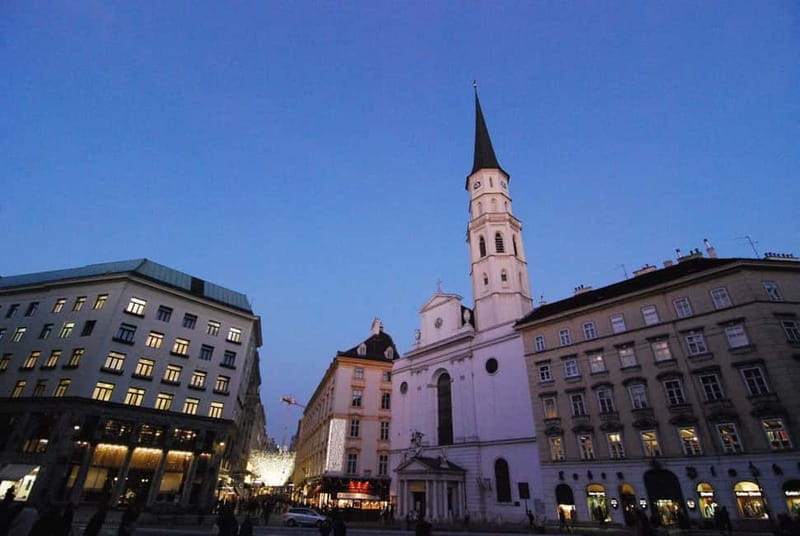
St. Michael’s Church is Vienna’s third-oldest church, and one of its most interesting features is the mixture of three architectural styles. That makes it a good early example of the tour’s approach: the guide points out what you are seeing, then adds the historical reason it looks that way.
The church is also tied to court life and the Hofburg complex. You do not need to be an architecture specialist to benefit here. A guide can help you separate Roman, medieval, and later imperial elements that may otherwise blur together.
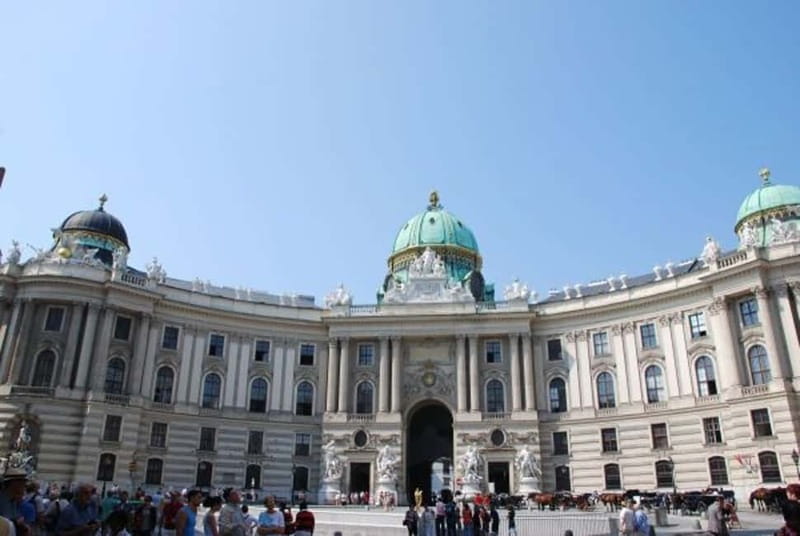
The Hofburg Palace then expands the scale dramatically. Its grounds cover 555,000 square meters, a figure that helps explain why this is not one tidy palace building but a large network of courtyards, wings, institutions, and ceremonial spaces.
The best part of this stop is the connection between architecture and authority. Instead of treating the Hofburg as a pretty backdrop, the tour explains important rulers and how the complex functioned as the center of power.
Heroes’ Square and the Imperial Treasury
Heroes’ Square, or Heldenplatz, gives you one of the clearest views of imperial ambition in Vienna. Its size is impressive, but the guide also draws attention to what lies behind the facades, which helps you see the square as more than an open space framed by monumental buildings.
The tour discusses the Imperial Treasury from outside and explains why it deserves a place on your own sightseeing list. Admission is not part of the walking tour, so you will need a separate ticket if you decide to enter.
This is one of the moments when the tour earns its keep. A short explanation can help you decide which museums deserve your limited time. Several people used the guide’s suggestions to choose additional museums and historic sites later in the day.
If you are already planning to visit the Imperial Treasury, taking this walk first may make the collection easier to place in the larger story of the Habsburgs. If your schedule is tight, at least you will know what you are passing.
More history walks in Vienna:
- Vienna: Time Travel and Magic Vienna History Tour
★ 4.6 · 3,879 reviews - Vienna: World War II Historical Walking Tour
★ 4.8 · 1,772 reviews - Vienna Historic Center Small Group Walking Tour
★ 5.0 · 1,746 reviews - Time Travel-Magic Vienna History Tour Ticket
★ 4.5 · 1,099 reviews
The Austrian National Library and Joseph II Square
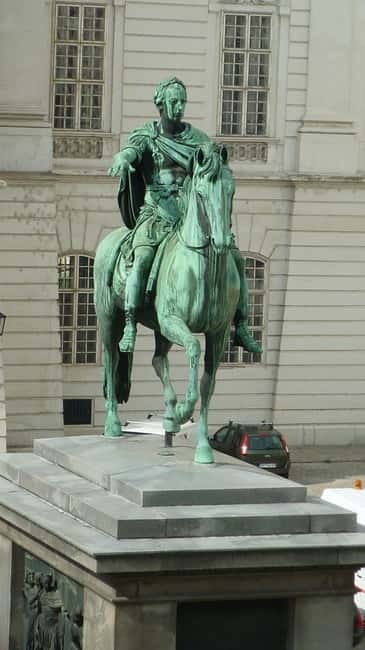
The Austrian National Library is one of the route’s most striking exterior stops. You see the library and hear about its state room, including the symbol on the roof and the reason the nearby square is named after Emperor Joseph II.
The state room is not included as an interior visit, so keep your expectations clear. You receive context and a view from the street, not time among the library’s shelves and ceiling decoration.
That distinction matters in Vienna, where a walking route can pass several major attractions in quick succession. This tour is a preview, not a substitute for every interior. I would use the guide’s comments to decide which buildings deserve a return visit.
The Joseph II material also adds a personal angle to a name that might otherwise seem like just another statue or square. The tour keeps bringing imperial titles back to actual people, decisions, and ceremonies.
Habsburg weddings and a closed Sunday stop
The church connected with Habsburg weddings adds some of the tour’s most memorable human detail. You learn about the imperial wedding tradition and why the groom was not even present at some ceremonies.
That sort of anecdote gives the dynastic story a little life. It also shows why a guide can be useful in Vienna. A building may look solemn and familiar, but the customs attached to it can be anything but ordinary.
The church is closed on Sundays and public holidays. On those days, expect the guide to explain the site from outside rather than take you inside. If seeing the interior matters to you, check your date before booking and plan a separate visit when it is open.
Albertina, wartime Vienna, and the State Opera
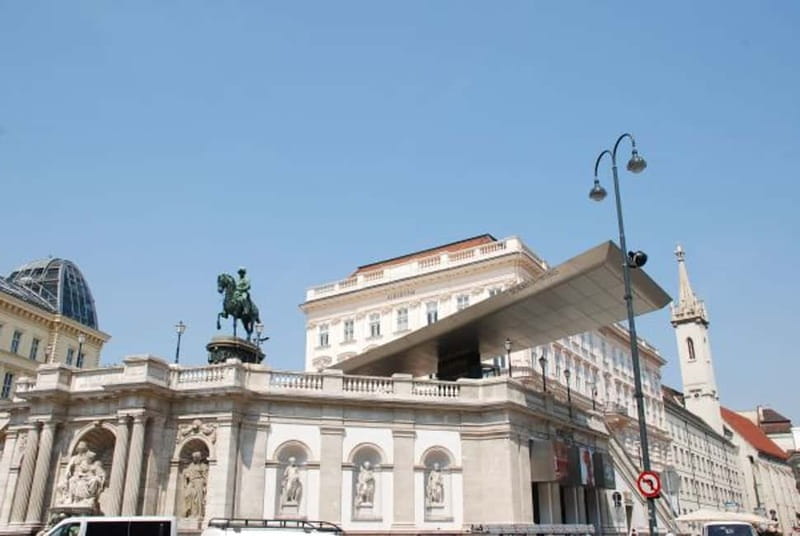
The Albertina is another important exterior stop. The tour identifies it as home to the world’s largest graphical collection, then shifts from art and imperial buildings to Vienna’s darker twentieth-century past.
At the Monument Against War and Fascism, the tone changes. You confront the damage and suffering connected with the Second World War, rather than hearing only about palaces and court ceremony.
This balance is important. Vienna’s central district can sometimes feel polished enough to hide its difficult chapters. The memorial makes those chapters visible, and the guide uses the surrounding buildings to explain how the city’s past is not limited to imperial grandeur.
The stop at the State Opera brings the route back to architecture, entertainment, and urban change. You learn why Hotel Sacher now occupies the site of the former Carinthian Gate Theatre.
That detail is small but useful. It shows how the city keeps changing beneath its famous names. You may know Hotel Sacher as a destination in its own right, but the tour places it within the older story of the city center.
Neuer Markt and the Imperial Crypt
At Neuer Markt, the Providentia Fountain becomes the setting for another anecdote. This is a good example of the tour’s informal style. The route is not just a march between famous buildings; it pauses for details that can make a square easier to remember.
The Imperial Crypt brings the Habsburg story to a more solemn close before the cathedral. The guide explains the family’s burial ritual, giving you a clearer sense of how the dynasty handled death, ceremony, and memory.
The Imperial Crypt is a separate attraction, and entrance is not included. If you want to go inside, save it for another time or return after the walk. The tour’s purpose here is to explain why the crypt matters, not to provide a full visit.
This sequence works well because it moves from public monuments to private ritual. You see how the Habsburgs presented power in life, then how they marked the end of that life.
Finishing at St. Stephen’s Cathedral
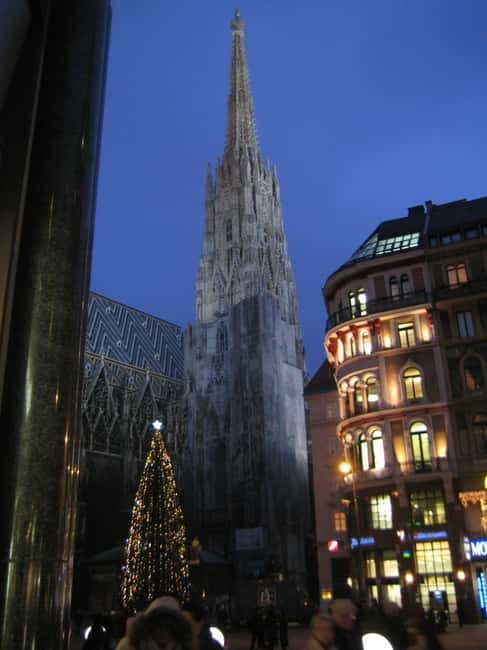
The walk finishes at St. Stephen’s Cathedral on Stephansplatz, the city’s best-known landmark. The cathedral is not merely a convenient endpoint. It gives the tour a clear final chapter.
You hear about its partial destruction during the Second World War and about common assumptions that are not quite correct. That correction fits the tour’s broader promise: look closely, ask questions, and do not accept every simplified schoolbook version of Vienna’s past.
The final location is practical, too. From Stephansplatz, you are well placed to continue exploring central Vienna, visit the cathedral separately, or follow the guide’s suggestions for museums and other attractions.
The supplied meeting information says the activity ends back at the meeting point, while the route details identify St. Stephen’s Cathedral and Stephansplatz as the endpoint. Confirm the exact end arrangement when you book, especially if you have a timed reservation afterward.
Guide style, group size, and pace
The guide can make or break a history walk, and this experience depends heavily on personality. Herbert is frequently praised for his humor, warmth, strong command of Vienna’s history and architecture, and practical advice for the rest of your stay.
He also uses images on an iPad to show how buildings looked after the Second World War. That is especially useful at sites where today’s restored facades do not reveal the scale of earlier damage.
Wolfgang also leads tours in English and German. His clear delivery and energetic explanations were particularly helpful for one Dutch-speaking participant, who found him easy to understand.
The group is described as small, with one reported group of seven and another tour operating almost like a private visit. Group size can vary, but the small-group design should make it easier to hear the guide and ask questions.
The pace is steady rather than strenuous. One person described it as not much walking, but the tour is still unsuitable for people with mobility impairments. You will be outdoors for two hours, standing and moving between stops, so comfortable shoes remain sensible.
Children under 12 are not accepted. The content is best suited to adults and older teenagers who can follow political, dynastic, architectural, and wartime themes.
What is included and what is not
The $33 price includes a local guide in English or German. It does not include entrance fees, so budget separately for the Imperial Treasury, Imperial Crypt, Austrian National Library state room, or other interiors you choose to visit afterward.
You are also asked not to bring luggage or large bags. Video and audio recording are not allowed. Pack lightly and rely on listening and note-taking rather than recording the commentary.
The walk runs in all weather. Vienna rain can change the feel of an outdoor tour quickly, so check the forecast and bring suitable clothing. There is no promise of shelter, indoor seating, or a weather cancellation.
You can cancel up to 24 hours before the start for a full refund, and the reserve-now-pay-later option lets you hold a place without paying immediately. Those terms are useful if your Vienna plans are still shifting.
Who should book this Vienna history tour?
I would choose this tour early in a first visit, ideally near the start of your stay. The route gives you a working map of the imperial center and helps you decide which museums and churches deserve more time.
It is also a good match if you like stories more than a list of dates. The strongest material is the human detail: absent grooms, burial customs, old theatres, rulers, rebuilding after wartime destruction, and the meaning hidden in architectural symbols.
You may want something else if your priority is entering every major attraction. This is an exterior-focused orientation walk, and two hours is not enough for full visits to the library, treasury, crypt, Albertina, and cathedral.
Book it if you value an engaging guide, a compact route, and historical context for Vienna’s grand center. Skip it if you need step-free access, are traveling with children under 12, or prefer to explore at your own pace with headphones and no fixed schedule.
FAQ
How long is the Vienna History Highlight Walking Tour?
The tour lasts two hours. Starting times vary, so check availability for the date you want.
Where does the tour start?
It starts in front of Loos Haus at Michaelerplatz 3, 1010 Vienna. The building is between Kohlmarkt and Herrengasse and has Raiffeisenbank on its facade.
How close is the meeting point to public transportation?
The meeting point is about a three-minute walk from Herrengasse station on Vienna’s U3 metro line.
Which languages are available?
The tour is conducted in English and German.
Is the tour suitable for children?
No. The activity is not suitable for children under 12.
Are entrance fees included?
No. The tour includes the local guide, but entrance fees are not included.
Does the tour operate in bad weather?
Yes. The tour takes place in all weather conditions.
Can I cancel for a refund?
You can cancel up to 24 hours in advance for a full refund. The reserve-now-pay-later option lets you book without paying immediately.
Just added around Vienna
- Private Tour from Vienna to Melk and Dürnstein★ 4.5 · 3 reviews
- Vienna: Johann Strauss 200th birthday anniversary exhibition★ 4.7 · 3 reviews
- Vienna Private Full Day Tour – Tickets to Schönbrunn & Lunch★ 5.0 · 3 reviews
- Private Salzburg Day Trip from Vienna★ 4.0 · 3 reviews
- Vienna: Entry Ticket Belvedere 21 & Contemporary Art★ 4.3 · 3 reviews
- Vienna by Night: Private Evening Food and Drink Tour★ 5.0 · 3 reviews
- Full-Day Private Trip from Vienna to Budapest★ 4.5 · 3 reviews
- 1.5 Hour Cinematic Style Portrait Photoshoot and Tour in Vienna★ 4.5 · 3 reviews
Historical Tours, compared.
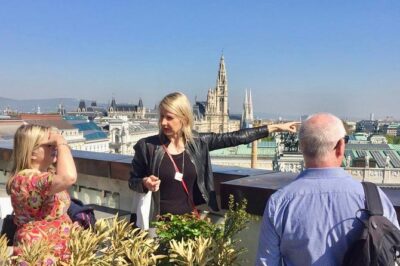
Vienna Historic Center Small Group Walking Tour
Read our review →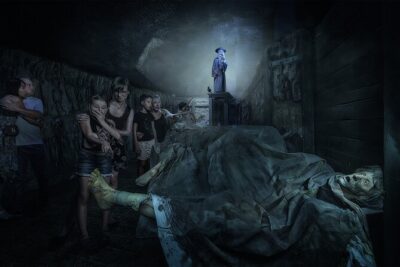
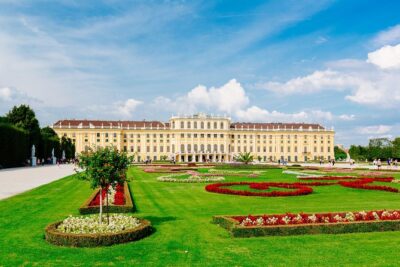
Skip-the-Line Schonbrunn Palace Guided Tour and Vienna Historical City Tour
Read our review →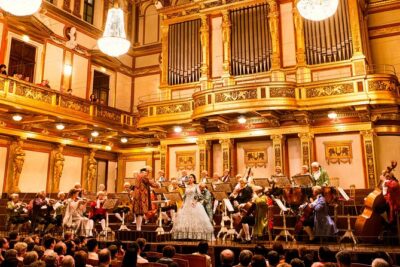
Vienna Mozart Concert in Historical Costumes at the Musikverein
Read our review →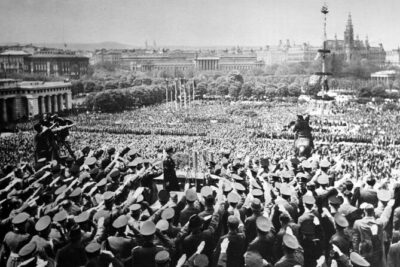
Vienna Classical Concert – Strauss in Historic 1837 Hall
Read our review →Browse the lists this tour appears in