
Reviewed · WALKING TOURS
Vienna Private Walking Tour including State Opera
Vienna’s grandest story unfolds in a compact walk, beginning near the State Opera and ending at mighty Stephansdom. In three hours, you move from Roman Vindobona to Habsburg rule, imperial music, war, and the birth of modern Austria. That is a lot of ground, but the route gives you a useful first map of the city.
I like the broad sweep of the tour, especially the way it connects opera and empire rather than treating them as separate subjects. I also like the private format, which lets your group ask questions and set the pace. The main caution is important: access to the State Opera is not clearly defined, and the experience may amount to the lobby or require a separate paid opera tour.
In This Review
- Key points to know
- Starting with opera, empire, and a question worth asking
- The route from Stephansplatz to the State Opera
- Mozart Monument and the music of imperial Vienna
- Hofburg and the Michaelertor gate
- Roman ruins, medieval walls, and the old Burg Theatre
- Graben and Peterskirche
- Stephansdom and the final look at Vienna’s past
- From the Holy Roman Empire to the Second Republic
- How the $323 group price works
- Who will get the most from this walk
- Should you book the Vienna private walking tour?
- FAQ
- How long does the Vienna private walking tour last?
- What is the price for the private group?
- Where does the tour meet?
- Is a visit to the State Opera included?
- Are entrance fees included?
- What languages are available?
- Is this a private tour?
- What should I bring?
- Can people with mobility impairments join?
Key points to know
- The State Opera is the headline stop, but confirm whether your booking includes more than the lobby.
- The route links Roman, medieval, imperial, and modern Vienna in one central walk.
- A private group of up to 15 can make the tour more personal, though larger groups may feel less intimate.
- The $323 price is per group, not per person, making it more appealing for a medium-sized party.
- English and German guides are available, with three hours devoted to walking and commentary.
- The tour has a serious guide-quality caution, so confirm the assigned guide and content before paying.
Starting with opera, empire, and a question worth asking
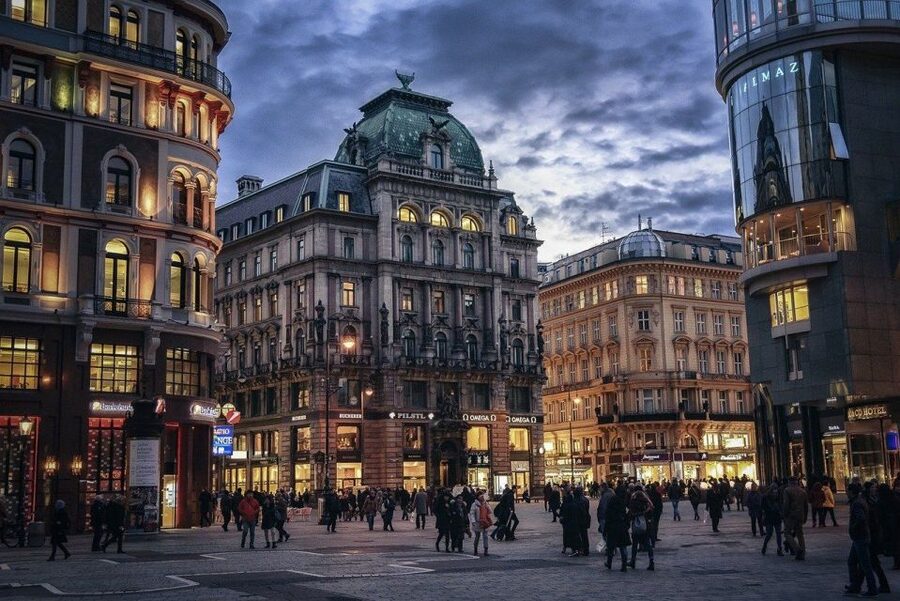
The tour is built around Vienna’s most famous partnership: political power and music. The State Opera recalls the city’s imperial court, while names such as Mozart, Haydn, Beethoven, Schubert, Johann Strauss, Brahms, and Mahler show how Vienna became one of Europe’s great music centers.
The opera house opened in the 1860s as the Vienna Court Opera. Its name changed in 1920, when the early Austrian Republic was taking shape. Directors including Gustav Mahler, Herbert von Karajan, and Claudio Abbado helped give the institution its lasting importance.
That background makes the opera stop worthwhile even if you are not a serious opera fan. You are not simply looking at a pretty building. You are seeing a place tied to the Habsburg court, changing political systems, and a performance tradition that still includes works such as La Traviata, La Clemenza di Tito, and Verdi’s Don Carlo.
But you need to clarify what visit the State Opera means here. One booking account describes the opera visit as only the lobby. Another says the opera tour had to be booked and paid for separately. Since entrance fees are not included, ask the provider directly if you want an interior tour beyond the public entrance areas.
More walking tours in Vienna:
- Vienna: Guided Walking Tour of City Center Highlights
★ 4.7 · 4,989 reviews - Vienna: Vienna Central Cemetery Guided Walking Tour
★ 4.8 · 3,307 reviews - Vienna: Guided Walking Tour of City Highlights & Hidden Gems
★ 4.9 · 2,180 reviews
The route from Stephansplatz to the State Opera
The listed meeting point is Stephansplatz 8A, in Vienna’s 1010 district. The tour description places the State Opera at the beginning, so confirm the exact meeting spot and walking order before the day of the tour. Stephansplatz and the opera are both central, but a clear starting instruction saves needless wandering.
The private format is the practical advantage here. Your group can hear the guide without competing with a large crowd, and you can ask for more detail about music, architecture, the Habsburgs, or twentieth-century politics. The tradeoff is value: $323 is a large bill for one or two people, but it works out to about $22 per person for a full group of 15.
The tour is offered in English or German. You receive a local professional guide, but the assigned person matters greatly. A German booking account praised a guide called competent and found the three hours lively, while another account described serious problems with guide Franziska Pfisker, including offensive comments about immigrants and language that minimized the murder of Jewish people during the Nazi period. That is not a small matter. I would confirm the guide’s name and request a change if you have concerns.
Mozart Monument and the music of imperial Vienna
The Mozart Monument gives the tour an easy entry into Vienna’s musical identity. Mozart’s connection to the city is familiar, but the larger story includes many composers who shaped different periods and styles.
You hear about Haydn, Beethoven, Schubert, the Strauss family, Brahms, and Mahler. That list can become a blur if presented as a roll call, so the guide’s storytelling is important. The best version of this stop should help you understand that music was part of public life, court culture, and Vienna’s international reputation.
The setting also helps connect music with power. The Habsburg rulers supported court performances and ceremonies, and the opera became one of the city’s grand public stages. This is one reason the tour works better for someone who wants context than for someone looking only for architectural photographs.
Do not expect a concert. The included activity is a guided visit, not an opera performance, and the available information does not promise a rehearsal or show. If music is your main reason for booking, treat the tour as an introduction and make separate plans for a performance.
Hofburg and the Michaelertor gate
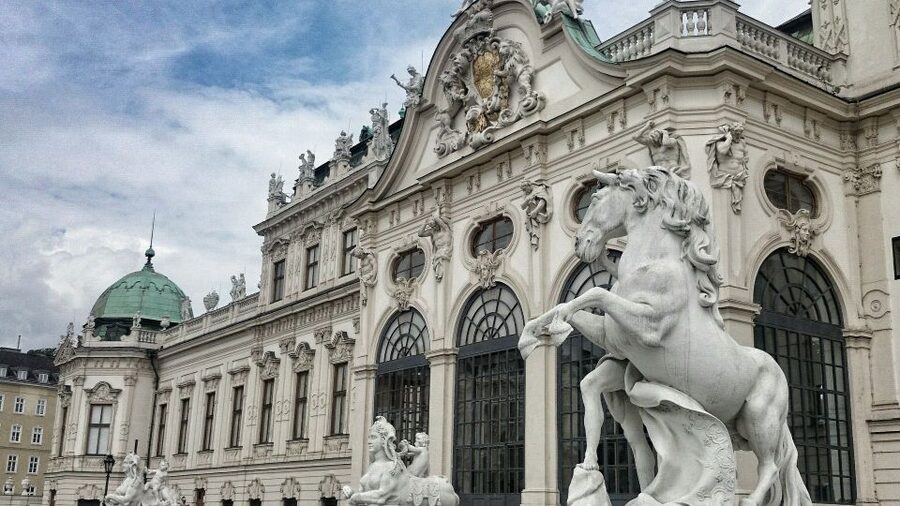
From the opera area, the route takes in the facades of the Hofburg and the Art History Museum. The Hofburg was the opulent home of the Habsburg Empire for centuries, so its scale tells you something before the guide explains a word.
The Art History Museum represents another side of imperial power: collecting, patronage, and fine art. The tour also covers nineteenth and twentieth-century art, giving you a bridge from court culture to Vienna’s later artistic life. The description does not include museum admission, so you should not expect time inside the galleries as part of the three-hour walk.
Passing through Michaelertor brings you to the Church of St. Michael, or Michaelerkirche. It served as the official church of the emperors for many years. That detail gives the church a role beyond its facade. It was connected to the monarchy and its religious ceremonies, not simply placed along the route as another old building.
The Hofburg area can feel grand and formal. I like it because the buildings make imperial ambition easy to see, but the sheer number of facades can also make this section feel crowded with names and dates. Ask the guide to focus on the details that explain how the monarchy operated, rather than trying to memorize every ruler.
A few more Vienna tours worth weighing up
- Vienna: Private Walking Tour with a Local Guide
★ 4.6 · 1,420 reviews - Vienna: Private Walking Tour with a Guide
★ 4.7 · 962 reviews - Vienna: Wine Tasting Experience in a Private Wine Cellar
★ 4.8 · 413 reviews - Private Day Tour Trip Salzburg Hallstatt and Melk from Vienna
★ 5.0 · 388 reviews
Roman ruins, medieval walls, and the old Burg Theatre
One of the more appealing parts of the route is the chance to see traces of earlier Vienna in the middle of the modern center. The tour points out Roman ruins from the city’s Vindobona period, medieval walls, and remains of the old Burg Theatre.
This layering is the real lesson. Vienna was not created all at once by the Habsburgs. Roman defenses, medieval growth, court expansion, and modern rebuilding sit close together. A short walk can show you several versions of the city without a separate museum visit.
The Roman connection is especially useful for first-time visitors. It places Vienna within the Roman frontier world and explains why the city developed where it did. The remains themselves may be modest compared with a large archaeological site, so keep your expectations sensible. Their value comes from seeing ancient evidence in an ordinary central square.
The medieval walls and old theatre remains also remind you that cities change by replacing themselves. The guide can turn small fragments into a story about defense, ceremony, and urban growth. This is exactly where a live guide adds more than a printed route.
Graben and Peterskirche
The walk continues along Graben, one of central Vienna’s best-known streets. Its roots reach back to the Roman period, and the route connects it with Richard the Lionheart’s entry into the city. That historical detail gives Graben more weight than a shopping street or grand boulevard.
I would pay attention to the street’s name and earlier function. A graben refers to a ditch, and the name points toward the area’s defensive past. The tour does not ask you to leave the center to find old Vienna. It shows how the old city survives in street plans and place names.
Peterskirche, or St. Peter’s Church, is another major stop. The church is presented as having been in place since the fourth century, making it one of the route’s oldest religious sites. Its presence helps explain how Christianity and the imperial city became closely linked over time.
The church stop is likely a visual pause as much as a history lesson. Three hours is not enough for long visits at every building, and the experience is primarily a walking tour. If you want extensive interior time at churches or museums, you will need to return on your own.
Stephansdom and the final look at Vienna’s past
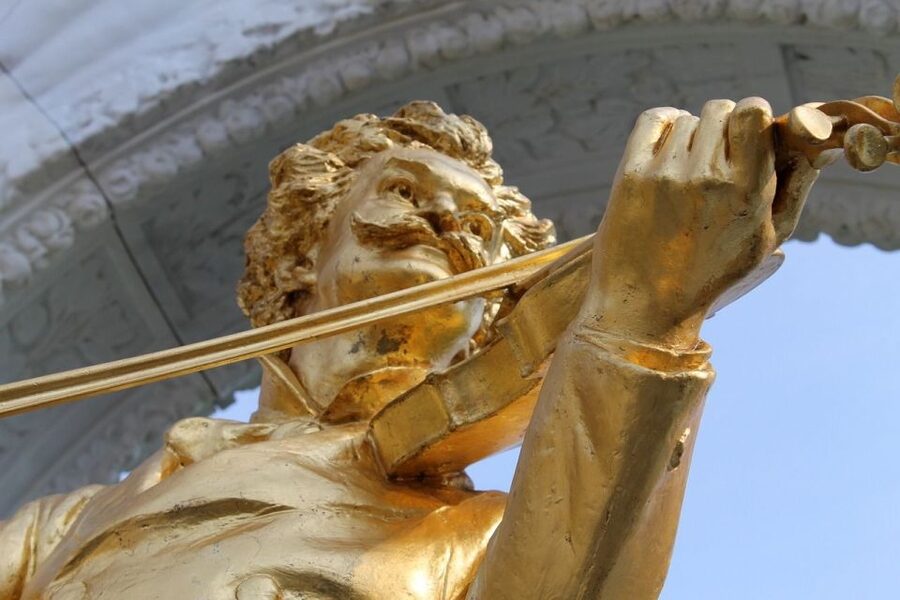
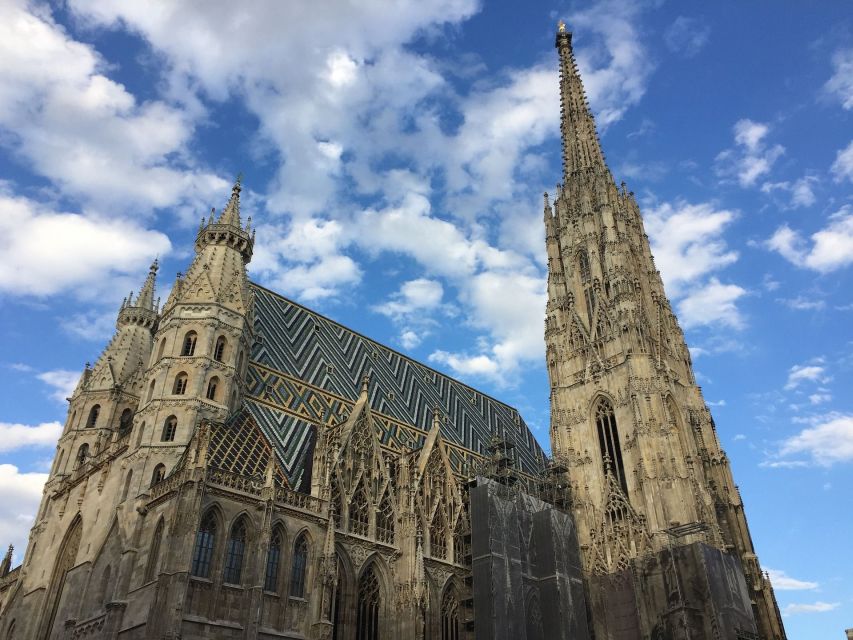
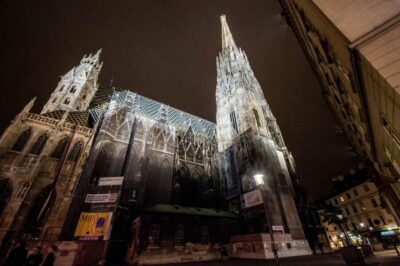
Stephansplatz brings the route to Vienna’s cathedral, Stephansdom. The cathedral is described as a Roman-Gothic masterpiece and one of the tallest churches in the world. It is the sort of ending that gives a walking tour a strong visual finish.
The cathedral also gathers the tour’s themes in one place. Roman and medieval Vienna lie beneath the modern city, the Habsburgs shaped the center around court and church, and music and art grew alongside political power. Stephansdom helps you see Vienna not as a collection of isolated sights, but as a city built in layers.
The square can be busy, and the tour’s pace may be brisk because so many major stops are packed into three hours. Wear comfortable shoes, as requested, and expect a substantial amount of walking. The experience is not suitable for people with mobility impairments, and the information does not promise adapted access or a slower route.
From the Holy Roman Empire to the Second Republic
The tour’s historical range reaches beyond buildings. You are meant to hear about the Holy Roman Empire, the Austro-Hungarian Empire, the World Wars, and the birth of the Second Republic.
That broad timeline is useful because Vienna’s buildings can otherwise make the city seem frozen in imperial splendor. The twentieth century changed Austria sharply, and a good guide should explain that the grand monarchy ended, the republic took shape, and the city carried the effects of war and political upheaval.
This is also the section that requires the most care. Discussions of Jewish history, Nazi persecution, war, and Austria’s postwar identity should use precise language. One reported tour experience included a guide using language that reduced systematic murder to people simply coming to harm. That phrasing is unacceptable, especially at sites connected with Vienna’s Jewish history.
I would treat guide selection as part of the booking decision, not a minor detail. The tour can be valuable when the guide is accurate, respectful, and willing to handle difficult subjects properly. If the assigned guide makes political or discriminatory remarks, you should end the tour and report the conduct to the provider.
How the $323 group price works
The listed price is $323 for a private group of up to 15. For a full group, that is a reasonable cost for a private three-hour introduction to central Vienna. For two people, it is expensive compared with joining a shared walking tour.
The price makes more sense if you are traveling with family or friends who want a private schedule. You are paying for the guide’s time rather than a seat per person, so the per-person cost drops quickly as the group grows. A group of six pays about $54 per person, while a group of 15 pays about $22 each.
The value depends heavily on the opera portion. Entrance fees are not included, and conflicting information indicates that a proper opera tour may require a separate booking and payment. Before committing, ask three direct questions:
- Is entry inside the State Opera included?
- Does included access go beyond the lobby?
- Are opera admission and guided opera-tour fees extra?
If the answer is only a lobby visit, the tour is best judged as a private central Vienna walk with an opera introduction, not as a full opera-house tour.
Who will get the most from this walk
I would recommend this experience to a first-time visitor who wants a quick historical framework before exploring Vienna independently. It suits families, couples traveling with friends, and groups that value a private guide over a low-cost shared tour.
It also fits people who enjoy connecting architecture with politics and music. You see the opera, Hofburg, churches, Graben, Roman remains, medieval defenses, and Stephansdom while hearing how they relate to the Habsburgs and modern Austria.
I would be more cautious if you have limited mobility, want long indoor visits, or are booking mainly for opera access. The walk covers many sights, but it does not replace museum entry, a full cathedral visit, or a dedicated backstage opera tour.
The guide’s quality is another deciding factor. A competent guide can make the three hours pass quickly and help you understand a city that can otherwise feel grand but confusing. The serious complaint about Franziska Pfisker means I would confirm the assigned guide and expect respectful treatment of sensitive history.
Should you book the Vienna private walking tour?
Book it if you are a group of several people and want a focused introduction to Vienna’s imperial center, music tradition, and layered past. The route is strong, the sights are central, and the private setup can make the history easier to follow.
Do not book it on the assumption that a full State Opera tour is guaranteed. Confirm the exact access and extra fees first. I would also verify the guide’s name and language, especially if historical accuracy and respectful discussion of twentieth-century persecution are important to you.
At $323, this is a fair group purchase when the guide is strong and the opera details are clear. For a small party, or for anyone mainly interested in the opera interior, a different arrangement may offer better value.
FAQ
How long does the Vienna private walking tour last?
The tour lasts three hours.
What is the price for the private group?
The listed price is $323 for a private group of up to 15 people.
Where does the tour meet?
The meeting point is Stephansplatz 8A, 1010 Wien, Austria. Since the route description begins at the State Opera, confirm the precise starting instructions before the tour.
Is a visit to the State Opera included?
The activity includes a visit to the State Opera, but the exact level of access is unclear. One booking account describes access limited to the lobby, while another says a separate opera tour and extra payment were needed. Confirm the details before booking.
Are entrance fees included?
No. Entrance fees are not included in the listed price.
What languages are available?
The tour is offered in English and German.
Is this a private tour?
Yes. It is described as a private group experience for up to 15 people.
What should I bring?
Bring comfortable shoes because the experience is a three-hour walking tour.
Can people with mobility impairments join?
The activity is listed as unsuitable for people with mobility impairments.
Just added around Vienna
- Private Tour from Vienna to Melk and Dürnstein★ 4.5 · 3 reviews
- Vienna: Johann Strauss 200th birthday anniversary exhibition★ 4.7 · 3 reviews
- Vienna Private Full Day Tour – Tickets to Schönbrunn & Lunch★ 5.0 · 3 reviews
- Private Salzburg Day Trip from Vienna★ 4.0 · 3 reviews
- Vienna: Entry Ticket Belvedere 21 & Contemporary Art★ 4.3 · 3 reviews
- Full-Day Private Trip from Vienna to Budapest★ 4.5 · 3 reviews
- Vienna by Night: Private Evening Food and Drink Tour★ 5.0 · 3 reviews
- 1.5 Hour Cinematic Style Portrait Photoshoot and Tour in Vienna★ 4.5 · 3 reviews
Walking Tours, compared.
Guided Walking Tour of City Center Highlights
Read our review →
Guided Walking Tour of City Highlights & Hidden Gems
Read our review →
Vienna Historic Center Small Group Walking Tour
Read our review →
Ghosts and Legends Guided Nighttime Walking Tour
Read our review →Browse the lists this tour appears in