
Reviewed · WALKING TOURS
Vienna: Private Walking Tour of the Central Cemetery
Vienna’s Central Cemetery turns death into a lesson in power, faith, tragedy, and changing taste. On this two-hour private walk, you’ll pass grand tombs of famous Viennese figures, memorials to victims of the 1881 Ringtheater fire, Soviet soldiers killed in 1945, and the cemetery’s striking Art Nouveau church. I especially like the mix of public history and personal stories, plus the chance to explore a place many visitors miss. The main consideration is language: the tour is offered in German only.
I also like the private group format, which gives you room to ask questions and follow the guide’s pace. Christian, the guide named in the tour details, is praised for his Viennese humor, warm manner, and clear explanations. At $217 per group of up to 10, it is good value for a full group, but costly for only one or two people. A €3 solidarity contribution per person is also paid on site.
In This Review
- Key points at a glance
- Why Vienna’s Central Cemetery is worth your time
- Meeting Christian at the second gate
- Famous tombs and the Viennese taste for remembrance
- The Ringtheater fire memorials
- Soviet soldiers and the memory of 1945
- The cemetery church and its Art Nouveau design
- The forest cemetery and modern burial
- The $217 group price and who gets the best value
- Language, access, and practical fit
- Who should book this Central Cemetery walk?
- Should you book it?
- FAQ
- Where does the tour meet?
- How long does the tour last?
- What language is the tour conducted in?
- How many people can join the private group?
- What is included in the price?
- Is the cemetery church part of the tour?
- What memorials will I see?
- Is the tour wheelchair accessible?
- Is there an extra charge on site?
Key points at a glance

- A private walk through Europe’s second-largest cemetery: You explore Vienna’s most important burial ground with your own group rather than joining a large public tour.
- Famous graves and social history: Monumental tombs show how fame, money, and status continued after death.
- Memorials to mass tragedy: The Ringtheater fire graves and Soviet war graves connect the cemetery to two very different moments in Vienna’s past.
- A dominant Art Nouveau church: Free admission to the cemetery church is included, with its architecture explained during the tour.
- A look at modern burial customs: The walk ends at the forest cemetery, showing how contemporary Vienna handles death and remembrance.
- German language and exact meeting point: Meet at the second gate, to the right of the entrance by the water hydrant.
Why Vienna’s Central Cemetery is worth your time
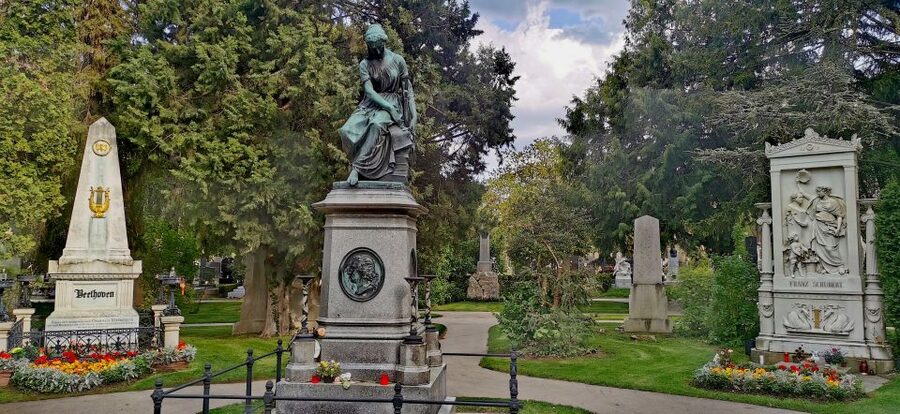
Vienna has no shortage of palaces, concert halls, and grand churches. Yet the Central Cemetery may tell you more about the city’s character than many of its polished landmarks. Here, the old idea that everyone is equal in death quickly gives way to a very Viennese display of rank, style, memory, and ceremony.
The cemetery was once heavily criticized. Its size and design did not immediately win people over. Today, it is considered one of Vienna’s most beautiful burial places, with broad paths, monumental graves, memorials, and the cemetery church gathered into one large historical setting.
I like this kind of outing because it gives you a different view of Vienna. You are not simply looking at old stones. You are seeing how the city remembers artists, public figures, victims, soldiers, and ordinary people. The cemetery becomes a record of public life, political change, religion, grief, and modern customs.
The private format matters here. The grounds are extensive, and a guide helps you focus on the parts that carry the most meaning. In two hours, you will not see every grave. That is a good thing. A guided route can give you a clear story instead of leaving you to wander past hundreds of names without context.
More walking tours in Vienna:
- Vienna: Guided Walking Tour of City Center Highlights
★ 4.7 · 4,989 reviews - Vienna: Vienna Central Cemetery Guided Walking Tour
★ 4.8 · 3,307 reviews - Vienna: Guided Walking Tour of City Highlights & Hidden Gems
★ 4.9 · 2,180 reviews
Meeting Christian at the second gate
The meeting point is specific: use the cemetery’s second gate. After entering, look to the right at the water hydrant, where the city guide will meet you.
That detail is worth taking seriously. A vast cemetery can have several entrances, and arriving at the wrong one could waste part of a short two-hour tour. Give yourself time to reach the second gate and get oriented before the start.
The experience provider is Christian Pacic, and Christian is the guide named in the tour details. His style appears to suit this setting well. He uses historical facts, curious details, humor, and what German speakers often call Viennese Schmäh, a dry, local style of wit.
That tone can make a difficult subject easier to approach. This is still a cemetery, and parts of the tour involve fire victims, war dead, and senseless loss. The humor is not meant to erase the sadness. It gives the stories a human rhythm and keeps the walk from becoming a solemn list of dates.
The tour is private, with a maximum of 10 people. That makes it a natural choice for a family, group of friends, or company outing. You can ask about a particular grave or pause when something catches your attention. A large group would feel less personal, but this booking avoids that problem.
Famous tombs and the Viennese taste for remembrance
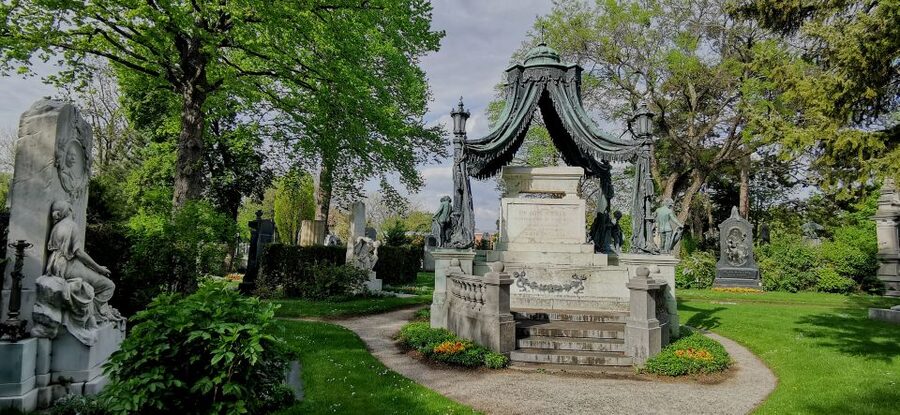
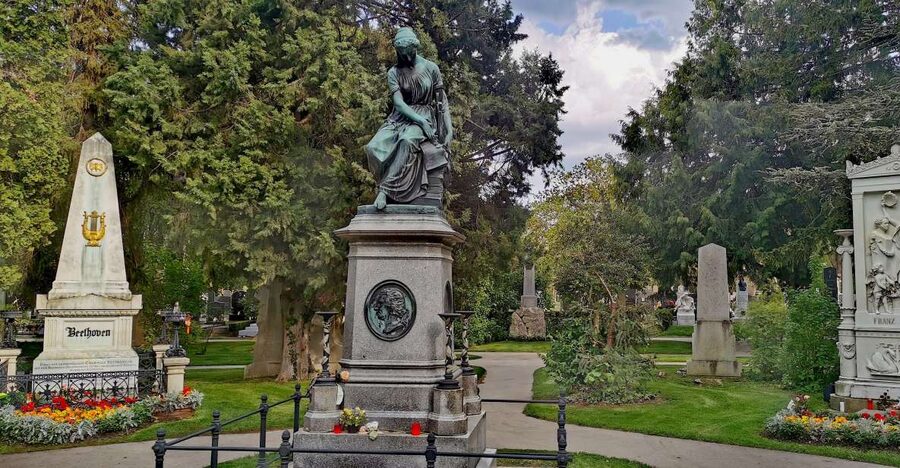
The first major theme is the way Vienna’s prominent people were remembered. The Central Cemetery contains monumental tombs of many famous figures, and the contrast between simple burial and grand memorial is one of the tour’s central ideas.
Below the ground, death may level social differences. Above it, marble, sculpture, inscriptions, and carefully chosen locations tell another story. Families and institutions used tombs to preserve reputation long after a person’s life had ended.
Your guide explains the people and the memorials rather than leaving you to decode unfamiliar names. That is especially useful if you do not speak German or know Vienna’s cultural history well, though the tour itself is conducted in German. Even when you recognize no names, the scale and design of the tombs make the point clear.
I find this part valuable because it connects the cemetery to the city you see outside its gates. Vienna’s culture is often presented through music, theater, architecture, and politics. The graves show how those fields were honored, debated, and remembered over time.
Do not expect the visit to feel like a parade of celebrity graves. The cemetery’s importance is broader than famous names. Monumental tombs are one layer of the story, not the whole experience. The guide also brings in the people who died in disasters and war, making the tour less about fame and more about how a city chooses what to remember.
The Ringtheater fire memorials
The graves for victims of the Ringtheater fire in 1881 add a sharp human focus to the tour. A theater fire is not just a historical date. It raises questions about public safety, panic, grief, and how a city responds when many people die in one place.
The memorials give you a physical point of contact with that tragedy. Instead of hearing a detached account somewhere in a museum, you stand among the graves connected to the event.
This is one of the strongest reasons to take the walk with a guide. Without context, a visitor might see another group of graves and move on. With explanation, the memorial becomes part of Vienna’s social history and a reminder that the city’s grand cultural life has also carried terrible risks.
The subject may not suit everyone, especially younger children or anyone who prefers a lighter sightseeing day. The tour is described as morbid, and that is accurate. Still, the balance of sober history and Viennese humor keeps the experience from becoming relentlessly grim.
A few more Vienna tours worth weighing up
- Vienna: Private Walking Tour with a Local Guide
★ 4.6 · 1,420 reviews - Vienna: Private Walking Tour with a Guide
★ 4.7 · 962 reviews - Vienna: Wine Tasting Experience in a Private Wine Cellar
★ 4.8 · 413 reviews - Private Day Tour Trip Salzburg Hallstatt and Melk from Vienna
★ 5.0 · 388 reviews
Soviet soldiers and the memory of 1945
The cemetery also contains graves for Soviet soldiers who died during the Battle of Vienna in 1945. This section shifts the focus from a nineteenth-century urban disaster to the violence and political complexity of the Second World War.
The memorials offer a chance to consider Vienna at the end of the war, when the city was caught in a major military struggle. The wording of the experience emphasizes both remembrance and warning, so the graves are not treated simply as decorative monuments.
This stop is useful for anyone interested in twentieth-century history. It also shows how one cemetery can hold memories that do not fit neatly together. Famous Viennese figures, victims of a theater fire, and foreign soldiers killed in battle all occupy the same broad burial ground.
You should expect the guide to frame these sites historically rather than turn them into a political argument. The value is in seeing how war remains present in the city through memorials and graves. The setting makes the cost of conflict concrete.
The cemetery church and its Art Nouveau design
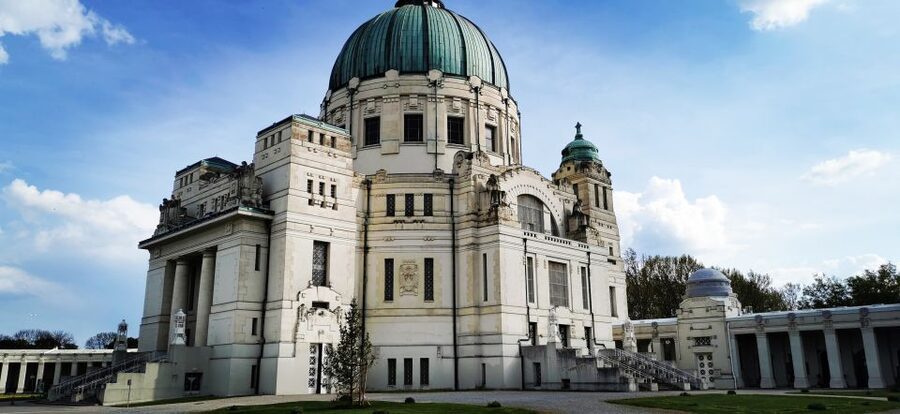
Near the center of the grounds, in a dominant position, is the cemetery church. Its Viennese Art Nouveau design gives the tour a change of mood and subject. After graves and memorials, you turn to architecture, religious space, and the way a building can shape an entire cemetery.
Admission to the church is included. During the guided visit, you learn about its architectural history and the role of the structure within the grounds.
The church is not a minor extra. Its position means it helps organize the cemetery visually. The description of the experience calls it a structure that rules the entire Central Cemetery, and that is a useful way to understand its importance. It acts as a central landmark, not simply a place of worship tucked beside the graves.
Art Nouveau is often associated with flowing lines, ornament, and an effort to unite architecture with decorative design. A guide can point out the church’s place within that tradition and explain why it looks different from older Viennese religious buildings.
For me, this is a welcome architectural pause. If you book a cemetery tour only for famous graves, you may overlook the buildings. Here, the church broadens the experience and gives you something to study besides names and dates.
The available information does not promise a long interior visit, so treat it as one important part of the two-hour route rather than a separate church tour. The included admission removes an extra cost, and the guide’s explanation gives the building context you might miss on your own.
The forest cemetery and modern burial
The final part of the walk reaches the forest cemetery, where modern burial customs enter the story. This is a smart ending because it brings the subject into the present rather than leaving you in the nineteenth or twentieth century.
A forest cemetery suggests a less monumental approach to remembrance. Instead of grand family tombs or large military memorials, the setting points toward burial practices that fit changing ideas about nature, space, simplicity, and personal choice.
The contrast is clear. Earlier stops show how people used stone, architecture, and public memorials to preserve status or mark collective tragedy. The forest cemetery shows that modern society is making different choices about how the dead should be remembered.
You may find this section especially useful if you are interested in how traditions change. It also gives the tour a thoughtful close. You begin with the cemetery’s monumental past and finish by considering where burial customs may be heading.
The $217 group price and who gets the best value
The price is $217 per group of up to 10 people. For a full group, that works out to $21.70 per person before the required €3 solidarity contribution per person. At that rate, a private guide, two hours of focused interpretation, and free church admission make the outing reasonably priced.
For two people, the calculation changes. You are paying $108.50 per person before the on-site contribution, so the booking makes much more financial sense for a group. A couple who strongly values privacy and guided interpretation may still find it worthwhile, but it is not a budget tour for a small party.
The private setup is the main value. You are not paying for a quick stop at one famous grave. You are paying for a dedicated route through a large cemetery, with explanations that link individuals, disasters, war, architecture, and modern burial.
The €3 solidarity contribution is charged on site and before the tour. Add it to your planning so the final cost does not surprise you.
Free cancellation up to 24 hours before the start and the option to reserve now and pay later make the booking less rigid. Starting times depend on availability, so check the schedule that suits your day rather than assuming the walk runs at a fixed hour.
Language, access, and practical fit
The live guide speaks German, and the additional tour information also lists German as the language. If you understand German well, you can enjoy the humor and historical detail as intended. If you do not, this is not the right choice unless someone in your group can interpret.
The cemetery is wheelchair accessible, which is important for a walking tour over a large site. Still, accessibility does not mean the experience is short or effortless. You will spend two hours moving through cemetery grounds, so consider your own comfort and pace.
Headsets are listed for groups from 15 people. This private tour allows up to 10, so you should not book it expecting headset equipment as a standard feature. The smaller group should help you hear the guide directly.
The exact starting point also matters more than usual. Go to the second gate, then look right at the water hydrant after entering. The tour lasts two hours, so arriving late could mean missing the opening explanation and falling behind the group.
Who should book this Central Cemetery walk?
I would recommend it to you if you enjoy unusual city history, architecture, memorials, and stories that go beyond the usual sightseeing route. It is particularly suitable for a group of friends or relatives who can share the fixed price.
You will get the most from it if you are comfortable with serious themes. The Ringtheater fire, wartime deaths, and the general subject of mortality are not softened into a cheerful attraction. At the same time, Christian’s reported style combines humor with historical detail, so the mood is not likely to remain heavy for two hours.
This is also a good pick for repeat visitors to Vienna. If you have already seen the major palaces and museums, the Central Cemetery offers a different side of the city. It shows how Vienna remembers its artists, victims, soldiers, and public figures.
Families should decide based on the child’s age and interest. The walk is educational, but the subject matter is death, disaster, and war. For adults and older children who can engage with those themes, it can be a memorable history lesson.
I would skip it if your group wants an English-language tour, a fast-paced attraction, or a simple list of famous graves. The guide’s stories and explanations are the point, and German fluency is essential.
Should you book it?
Book this private Central Cemetery tour if you have a German-speaking group of several people and want a thoughtful, slightly unusual view of Vienna. The combination of famous tombs, disaster memorials, war graves, the Art Nouveau church, and the forest cemetery gives the two hours a clear arc from imperial memory to modern burial.
For a full group, the $217 price is fair. For one or two people, it becomes a specialist splurge, so you should have a strong interest in cemeteries, architecture, or Vienna’s social history before committing. The exact second-gate meeting point, German-only guiding, and €3 per-person contribution are the practical details to settle first.
FAQ
Where does the tour meet?
Meet at the second gate of Vienna’s Central Cemetery. After entering, find the city guide on the right at the water hydrant.
How long does the tour last?
The private walking tour lasts two hours.
What language is the tour conducted in?
The live tour guide speaks German. The listed tour language is also German.
How many people can join the private group?
The price covers one private group of up to 10 people.
What is included in the price?
The tour includes an accredited Austrian guide and free admission to the cemetery church. Headsets are listed for groups from 15 people, while this private group has a maximum of 10.
Is the cemetery church part of the tour?
Yes. The route includes the cemetery church, and the guide explains its architectural history. Admission is included.
What memorials will I see?
The tour includes monumental tombs of famous people, graves for victims of the 1881 Ringtheater fire, and graves for Soviet soldiers who died in the Battle of Vienna in 1945.
Is the tour wheelchair accessible?
Yes, the activity is listed as wheelchair accessible.
Is there an extra charge on site?
Yes. A €3 solidarity contribution per person is charged on site before the tour.
Just added around Vienna
- Private Tour from Vienna to Melk and Dürnstein★ 4.5 · 3 reviews
- Vienna: Johann Strauss 200th birthday anniversary exhibition★ 4.7 · 3 reviews
- Vienna Private Full Day Tour – Tickets to Schönbrunn & Lunch★ 5.0 · 3 reviews
- Private Salzburg Day Trip from Vienna★ 4.0 · 3 reviews
- Vienna: Entry Ticket Belvedere 21 & Contemporary Art★ 4.3 · 3 reviews
- Full-Day Private Trip from Vienna to Budapest★ 4.5 · 3 reviews
- Vienna by Night: Private Evening Food and Drink Tour★ 5.0 · 3 reviews
- 1.5 Hour Cinematic Style Portrait Photoshoot and Tour in Vienna★ 4.5 · 3 reviews
Walking Tours, compared.
Guided Walking Tour of City Center Highlights
Read our review →
Guided Walking Tour of City Highlights & Hidden Gems
Read our review →


Vienna Historic Center Small Group Walking Tour
Read our review →
Ghosts and Legends Guided Nighttime Walking Tour
Read our review →Browse the lists this tour appears in