
Reviewed · HISTORICAL TOURS
Private Vienna Highlights History Walk — WWII and Post War Vienna
Vienna’s grandest sights tell a sharper story when you connect them to Nazi rule, wartime destruction, Soviet occupation, and Austria’s return to independence. This private walk moves from Belvedere Palace to St. Stephen’s Cathedral, using a short tram ride and plenty of time on foot to link the city’s monuments with its modern political past.
I like the private format, which lets your guide adjust the pace and answer the questions that matter to you. I also like the hotel pickup and the chance to learn Vienna’s public transport system while seeing major sights such as the Hofburg, Heldenplatz, and the Judenplatz Holocaust Memorial.
The main consideration is the pace. Three hours is enough for a strong city orientation, but not for extended interior visits. Public transport fares, food, drinks, and hotel drop-off are not included, and poor weather can make the walking less pleasant.
In This Review
- Key points to know before booking
- Belvedere Palace sets up the whole Vienna story
- Schwarzenbergplatz shows the uneasy meaning of liberation
- A tram ride turns the Ringstraße into a history lesson
- Burggarten and the Academy of Fine Arts add personal detail
- MuseumsQuartier reveals concrete wartime scars
- Heldenplatz turns ceremony into a warning
- The Hofburg follows seven centuries of authority
- Judenplatz brings the tour to its quietest moment
- The Plague Column and St. Stephen’s Cathedral close the route
- What the private guide adds
- Price, timing, and physical demands
- Who should book this Vienna walk?
- Should you book it?
- FAQ
- How long does the Vienna history walk last?
- What time does the tour start?
- Is hotel pickup included?
- Is hotel drop-off included?
- Are public transport fares included?
- How many people can join the private tour?
- Can I cancel for a full refund?
Key points to know before booking
- A WWII and postwar focus: The route links Hitler’s 1938 Anschluss speech, the 1945 Soviet memorial, wartime damage, and Austria’s 1955 independence.
- A private group of up to 10: You get a guide’s full attention rather than following a large crowd.
- Belvedere begins the story: The palace terrace offers a broad view and a useful introduction to Austria’s shift from empire to republic.
- Major sights without a packed museum schedule: Most stops are outdoor landmarks, so you see a great deal in three hours without spending the tour in galleries.
- Guides shape the experience: Walter, Brigitte, Alex, Andrea, Hannes, and Dr. Alexander Stollhof have all led guests through this company’s Vienna programs.
- Pickup is included, but not the ride home: Collection is available from hotels, vacation rentals, Vienna’s main train stations, and the Reichsbrücke pier.
Belvedere Palace sets up the whole Vienna story
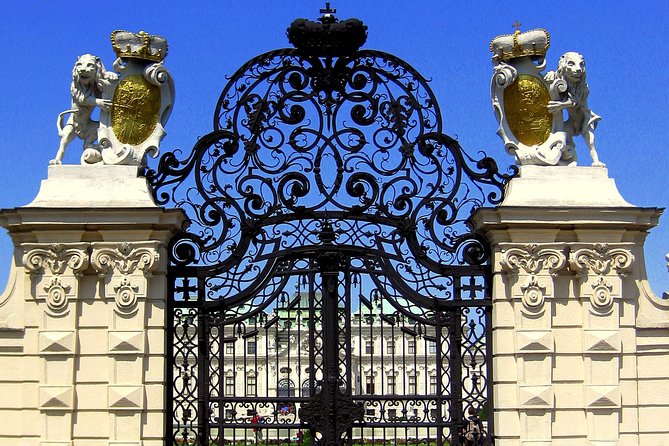
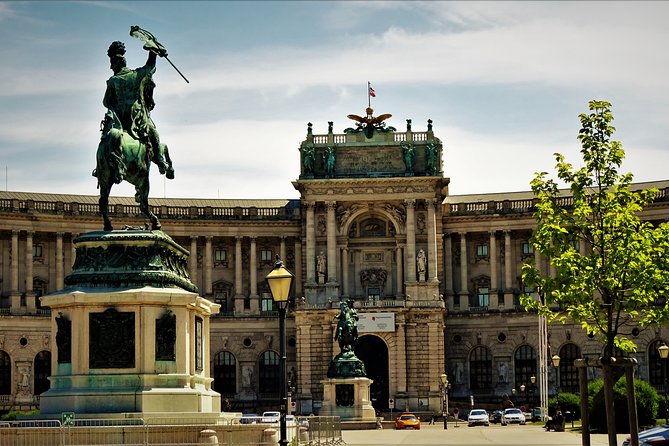
The tour begins at Upper Belvedere, one of the best places in Vienna to get your bearings. The palace was built by Prince Eugene, a military commander who never became a ruler, yet his residence reflects the confidence of imperial Austria.
From the terrace, your guide can frame Vienna as both a seat of power and a city shaped by conflict. The view helps explain the movement from princely ambition to the modern Austrian state. In 1955, the Belvedere became the symbolic birthplace of Austria’s Second Republic when the State Treaty restored the country’s independence.
That connection gives this opening stop more weight than a simple palace photo. You are not just looking at ornate Baroque architecture. You are beginning with the moment Austria emerged from postwar occupation and adopted permanent neutrality.
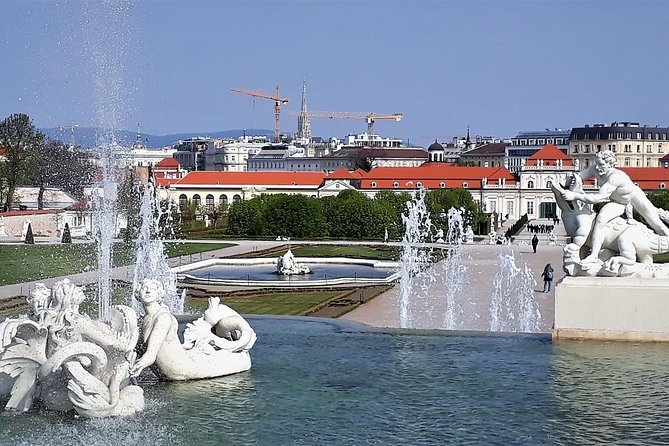
The route descends through the Belvedere Gardens, where the carefully ordered paths and fountains reflect Baroque ideas about rank and control. The gardens are a useful visual lesson in how rulers used design to make power look natural and inevitable.
Admission is listed as free for the tour stop, but the experience is centered on the exterior grounds and views. If you want to see the museum collections inside Upper Belvedere or Lower Belvedere, plan that for another visit.
More walking tours in Vienna:
- Vienna: Guided Walking Tour of City Center Highlights
★ 4.7 · 4,989 reviews - Vienna: Vienna Central Cemetery Guided Walking Tour
★ 4.8 · 3,307 reviews - Vienna: Guided Walking Tour of City Highlights & Hidden Gems
★ 4.9 · 2,180 reviews
Schwarzenbergplatz shows the uneasy meaning of liberation
A short walk brings you to Schwarzenbergplatz and the Soviet War Memorial. Erected in honor of Red Army soldiers who died in the 1945 battle for Vienna, the monument recalls the defeat of Nazi rule.
This is one of the tour’s strongest historical moments because the meaning is not simple. Soviet troops helped end Nazi control, but the Soviet presence also became part of Austria’s postwar occupation. Your guide can help you hold both facts at once: liberation and occupation belong to the same chapter.
Nearby, the Hochstrahlbrunnen adds a lighter note. The fountain celebrates Vienna’s alpine water supply and faces the elegant French Embassy. The two buildings offer a quick contrast in public messages, one monumental and civic, the other formal and diplomatic.
You spend about 10 minutes at the Soviet memorial, so expect explanation rather than a long pause for private reflection. If this subject matters greatly to you, use the private setting to ask for more context. If you prefer a broad introduction to Vienna, the guide can keep the stop moving.
A tram ride turns the Ringstraße into a history lesson
The itinerary includes a short tram ride along the Ringstraße. This matters because Vienna’s public transport is part of daily life, not just a way to cover distance. A private guide can show you how to use the system while moving between the southern part of the center and the Hofburg area.
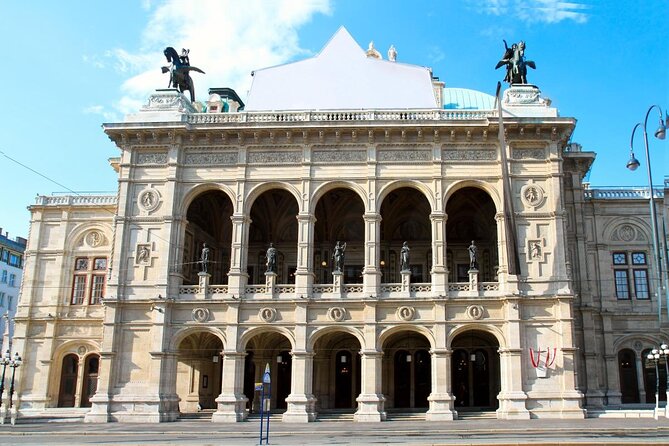
The Ringstraße itself was a 19th-century prestige project, lined with grand public buildings that projected imperial confidence. Passing the rebuilt State Opera adds a WWII detail to that imperial setting. The opera house was damaged in the war and later restored, making it a useful example of Vienna’s effort to preserve cultural continuity after destruction.
The transport portion is not a private vehicle transfer. Public transport costs are not included, and you should expect to walk to stops and board with your guide. Bring a little cash or a valid transport ticket, and wear shoes suitable for several hours on pavement.
Burggarten and the Academy of Fine Arts add personal detail
At Burggarten, Mozart’s monument faces a garden once used by the imperial court. The setting is calm, but the next detail is more pointed: the nearby Academy of Fine Arts rejected Adolf Hitler when he applied as a young man.
This should be treated as a historical footnote, not a claim that one admissions decision caused later events. Its value is that it connects the huge story of dictatorship to one ordinary institutional decision in Vienna. Guides such as Walter and Brigitte are praised for this sort of anecdote, the small detail that makes a familiar street easier to remember.
The stop is brief, around five minutes. You will have time for photographs and a compact explanation, but not a full visit to the academy.
More history walks in Vienna:
- Vienna: Time Travel and Magic Vienna History Tour
★ 4.6 · 3,879 reviews - Vienna: World War II Historical Walking Tour
★ 4.8 · 1,772 reviews - Vienna Historic Center Small Group Walking Tour
★ 5.0 · 1,746 reviews - Time Travel-Magic Vienna History Tour Ticket
★ 4.5 · 1,099 reviews
MuseumsQuartier reveals concrete wartime scars
Maria Theresa’s monument anchors the square between Vienna’s twin museums. It is one of the city’s finest imperial spaces, built to express order, education, and state power.
Look beyond the statues and museum façades for one of Vienna’s six FLAK towers. These massive anti-aircraft structures were built during the final, militarized phase of the war. Their thick concrete walls were designed to survive attack, and many remain because demolition is difficult.
The contrast is blunt: imperial sculpture on one side, military concrete on the other. That pairing makes this a valuable stop for understanding how Vienna can look untouched at first glance while still carrying very visible marks of the 20th century.
You spend about 10 minutes here. The museums are not part of the included stop, so do not expect time to enter. If you want to visit the Kunsthistorisches Museum or the Naturhistorisches Museum, schedule them separately.
Heldenplatz turns ceremony into a warning
Heldenplatz is the tour’s most important political setting. The square was created for imperial ceremony and military display, but in March 1938 it became the scene of Adolf Hitler’s speech announcing the Anschluss, Nazi Germany’s annexation of Austria.
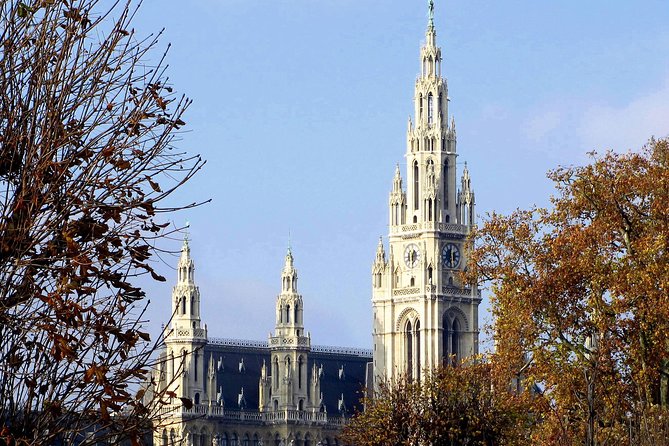
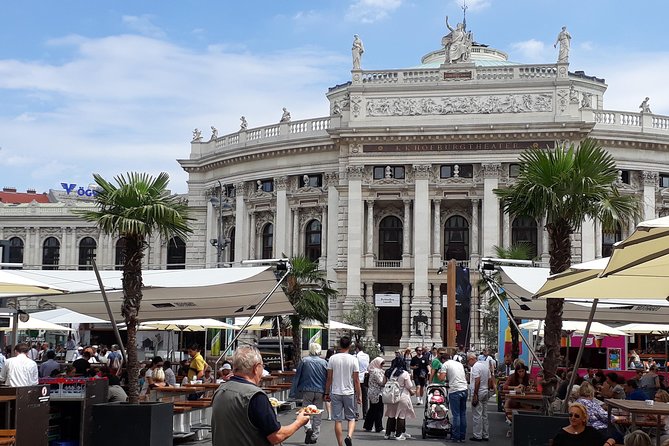
That history changes the way you read the open space. What once projected Habsburg authority later became a stage for mass political theater. Today, the surrounding buildings still present an impressive panorama of power, including the Hofburg, museums, Parliament, City Hall, and the Burgtheater.
This is a good place to pause and consider how public spaces can be reused by different governments and movements. The buildings remain, but their meaning shifts.
The scheduled stop lasts about 15 minutes. That is enough for a clear explanation, though the square deserves more time if you want to linger, take photographs, or ask detailed questions about the Anschluss.
The Hofburg follows seven centuries of authority
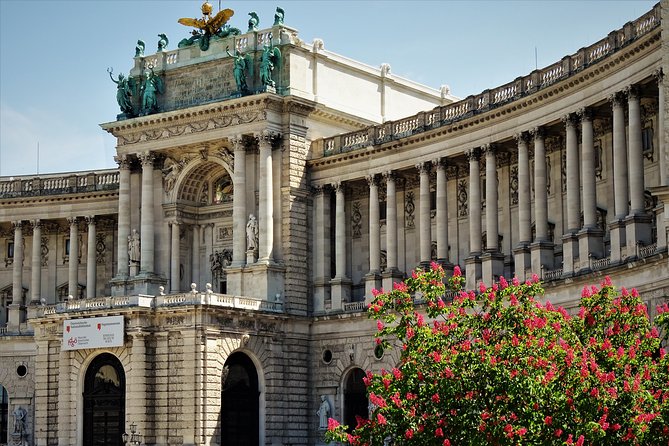
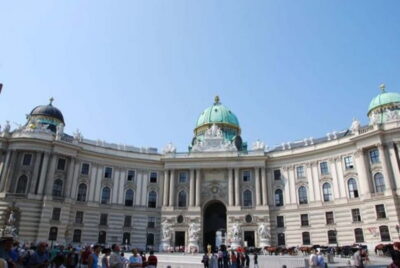
The Hofburg is less a single palace than a complex that grew over roughly seven centuries. It served dukes, emperors, and eventually the modern Austrian presidency.
A guide can help you read the jumble of wings and façades as a record of changing power. The point is not simply that the Habsburgs lived here. It is that the same center of authority adapted from monarchy to republic, even as Austria’s role in Europe changed dramatically.
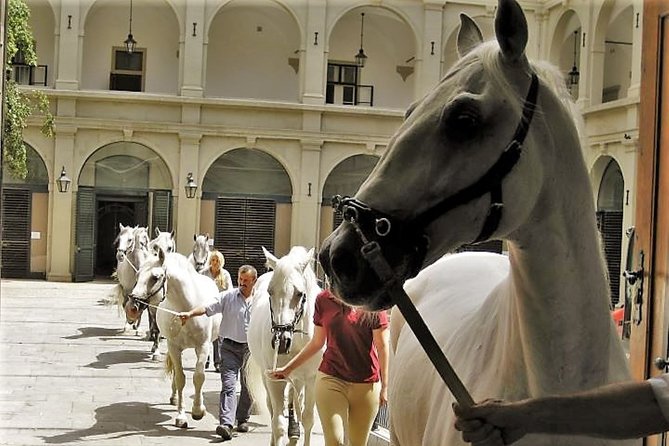
You spend about 15 minutes at the Hofburg. The tour does not include interior admission, so this is an exterior introduction. If you have only one day in Vienna, this overview is useful because it helps you decide if the Imperial Apartments, the Sisi Museum, or the Spanish Riding School deserve a separate booking.
As the route continues, imperial façades meet churches, luxury shops, and ordinary city streets. That mixture is very Viennese. Ceremony, commerce, and religion have long shared the same few blocks.
Judenplatz brings the tour to its quietest moment
At Judenplatz, the mood changes. The square sits on the site of Vienna’s medieval Jewish community, which was destroyed in 1421. The Holocaust Memorial, often called the Nameless Library, commemorates the 65,000 Austrian Jews murdered in the Shoah.
This is a quiet and essential stop. The memorial’s sealed-book design suggests shelves of books that cannot be opened, a powerful image for lives and stories erased by murder.
The stop lasts about 15 minutes. You will want to give it your full attention rather than treat it as a quick photograph. The private format helps here because you can ask questions or simply remain silent without being pushed along by a large group.
The tour’s movement from Heldenplatz to Judenplatz is also well judged. It shifts from public spectacle to personal loss, showing that Vienna’s wartime history is not only about armies, buildings, and political speeches.
The Plague Column and St. Stephen’s Cathedral close the route
The Pestsäule, or Plague Column, was built during the Counter-Reformation after a devastating plague outbreak. Its crowded marble figures turn religious devotion into public theater, much as the imperial buildings use architecture to express authority.
You get about five minutes here. It is a short stop, but the column helps connect the modern city to earlier crises. Vienna has repeatedly used art and ceremony to explain disaster and recovery.
The final major sight is St. Stephen’s Cathedral, Vienna’s Gothic center. The cathedral’s roof and towers are among the city’s most familiar images, but the tour adds a painful WWII detail: in April 1945, parts of the cathedral burned after looters set fire to nearby shops.
That ending brings the wartime story back to the city itself. The damage was not only caused by military attacks. Chaos and looting also took a toll as the war collapsed.
You spend about 10 minutes at the cathedral. Again, this is an exterior visit rather than a full cathedral tour. If you want to see the interior, climb a tower, or explore the catacombs, allow separate time.
What the private guide adds
The guide is the deciding factor here. The route covers a lot of ground and several difficult subjects, so a good storyteller matters more than a memorized list of dates.
Walter is especially associated with a lively, organized approach. He was born and raised in Vienna and spent a decade in the United States, which gives him a useful ability to explain local customs and history to English-speaking visitors. He is also praised for handling subways, trains, and trams, a practical benefit if you are visiting for only a short time.
Brigitte is known for adjusting tours around questions and interests, with a warm personal manner and useful restaurant advice. Alex is described as entertaining and willing to find answers beyond the planned subject. Andrea, Hannes, and Dr. Alexander Stollhof have also led Vienna walks.
You cannot choose a specific guide from the information provided, so book this for the private format and subject matter rather than assuming one named person will lead it. Still, the consistent strengths are clear: good local stories, patient answers, flexible routing, and practical city advice.
The private setting also lets you make sensible changes. If you have already visited the Hofburg, you might ask for more time around Judenplatz or the wartime memorials. If you are on a day trip from Bratislava or arriving by train, the guide can use the three hours as a focused first look at the center.
Price, timing, and physical demands
The cost is $342.40 per group of up to 10 people. For a full group, that is about $34 per person. For five people, it is about $68 each. For two people, the price becomes much harder to justify unless you place a high value on a private guide and tailored attention.
The tour lasts about three hours and begins at either 9:30 a.m. or 2 p.m. Pickup is offered from hotels and vacation rentals in Vienna, Vienna Hauptbahnhof, Vienna West station, the Reichsbrücke pier, and the A-Rosa pier at Handelskai 265. Other meeting points can be arranged.
Hotel pickup is a real convenience, especially if you are not sure which tram or subway to take to Belvedere. Hotel drop-off is not included, so plan to finish at St. Stephen’s Cathedral and continue on your own.
You need moderate physical fitness. This is a walking tour with a tram ride, not a bus sightseeing circuit. Wear comfortable shoes, check the forecast, and carry water. Service animals are allowed, but pets are not permitted in certain places on the route. Food and drinks are also your responsibility, although one guide has been praised for fitting a coffee break into the three-hour schedule when time allowed.
Free cancellation is available up to 24 hours before the start time. Changes or cancellations made later do not qualify for a refund.
Who should book this Vienna walk?
I would choose this for a first visit, a short stay, or a port and rail stop when you need a useful overview fast. It suits you especially well if WWII, the Holocaust, postwar Austria, and the shift from empire to republic are central interests.
It also works for families or small groups who want to ask questions without worrying about a large group’s pace. The route has enough famous architecture for first-time sightseeing, but the historical links give it more purpose than a standard photo walk.
You may want something else if you want long museum visits, extensive interiors, or a slow architectural study. Most stops are brief, and the price is less attractive for one or two people. You should also rethink the booking if you dislike walking in uncertain weather or prefer transport costs and meals bundled into the price.
Should you book it?
Book it if you want Vienna’s famous center explained through power, war, memory, and recovery, rather than as a string of pretty façades. The route covers Belvedere, the Hofburg, Heldenplatz, Judenplatz, and St. Stephen’s Cathedral while giving you a practical introduction to public transport.
For a full group, the price is fair for a private licensed guide and hotel pickup. For a couple, it is a splurge, but the ability to shape the conversation may make it worthwhile. If you book, arrive ready to walk, bring a transport ticket or money for the short ride, and tell the guide what you most want to understand. That is where this experience earns its keep.
FAQ
How long does the Vienna history walk last?
The experience lasts approximately three hours.
What time does the tour start?
The available starting times are 9:30 a.m. and 2 p.m.
Is hotel pickup included?
Yes. Pickup is available from hotels and vacation rentals in Vienna, as well as Vienna Hauptbahnhof, Vienna West station, and the Reichsbrücke pier. Pickup from the A-Rosa ship is at Handelskai 265.
Is hotel drop-off included?
No. The tour includes pickup, but hotel drop-off is not included.
Are public transport fares included?
No. Public transport to and from the attractions is not included. The route includes a short tram ride, so you should arrange your own transport ticket or fare.
How many people can join the private tour?
The private tour is available for one group of up to 10 people, and only your group participates.
Can I cancel for a full refund?
Yes. You can cancel at least 24 hours before the experience begins for a full refund. Cancellations or changes made less than 24 hours before the start time are not refunded or accepted.
Just added around Vienna
- Private Tour from Vienna to Melk and Dürnstein★ 4.5 · 3 reviews
- Vienna: Johann Strauss 200th birthday anniversary exhibition★ 4.7 · 3 reviews
- Vienna Private Full Day Tour – Tickets to Schönbrunn & Lunch★ 5.0 · 3 reviews
- Private Salzburg Day Trip from Vienna★ 4.0 · 3 reviews
- Vienna: Entry Ticket Belvedere 21 & Contemporary Art★ 4.3 · 3 reviews
- Full-Day Private Trip from Vienna to Budapest★ 4.5 · 3 reviews
- Vienna by Night: Private Evening Food and Drink Tour★ 5.0 · 3 reviews
- 1.5 Hour Cinematic Style Portrait Photoshoot and Tour in Vienna★ 4.5 · 3 reviews
Historical Tours, compared.
Vienna Historic Center Small Group Walking Tour
Read our review →
Skip-the-Line Schonbrunn Palace Guided Tour and Vienna Historical City Tour
Read our review →
Vienna Mozart Concert in Historical Costumes at the Musikverein
Read our review →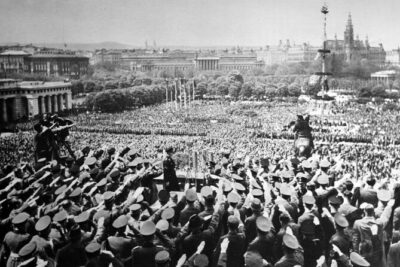
Browse the lists this tour appears in