
Reviewed · HISTORICAL TOURS
World War II History Vienna Old Town Private Walking Tour
Vienna’s grand center carries unsettling reminders beneath its imperial beauty. This two-hour walk begins at the former Gestapo headquarters and follows the story from Franz Ferdinand’s assassination through Hitler’s annexation of Austria, the Holocaust, the bombing of Vienna, and the city’s liberation. The contrast between elegant streets and painful memory gives the tour its real force.
I like the way the route ties major events to places you can actually see, rather than leaving World War I and World War II as a string of dates. I also like that this is a private tour, so you can ask about Austrian Nazism, Jewish life, propaganda, or a particular monument without waiting for a large group to move on. The main drawback is its brisk two-hour length: serious subjects receive a useful introduction, but not a full study of wartime Vienna.
In This Review
- Key points at a glance
- Starting at Morzinplatz, where Vienna’s wartime story turns dark
- Following the road from Franz Ferdinand to Hitler’s Austria
- Reading Vienna’s streets through the Holocaust Memorial and Remembrance Stones
- Hofburg and Heldenplatz, from imperial power to modern memory
- Burggarten and the monument to Emperor Franz Joseph I
- Ending near the Vienna State Opera and the 1945 bombing
- What two hours can, and cannot, cover
- Guide quality and the benefit of a private group
- Is $214 per person a fair price?
- Practical advice for making the walk comfortable
- Who should book this Vienna war history tour?
- Should you book it?
- FAQ
- How long does the World War II History Vienna Old Town Private Walking Tour last?
- Where does the tour meet?
- Where does the tour end?
- Is this a private tour?
- How many people can join one guide?
- Which languages are available?
- Does the tour include entry to Hofburg?
- What topics does the guide cover?
- Can I cancel for a full refund?
Key points at a glance
- Morzinplatz begins the tour at a former Gestapo headquarters: The opening memorial sets a serious tone from the first minute.
- The route links World War I and World War II: You follow the path from Franz Ferdinand’s assassination to Hitler’s annexation of Austria.
- Holocaust memorials appear in the ordinary city streets: The Holocaust Memorial and Remembrance Stones make Jewish persecution personal and visible.
- Hofburg and Heldenplatz show power and memory side by side: The imperial center helps explain Austria’s political story.
- The private format gives you room to ask questions: Groups are limited to 1 to 25 people per guide, with extra guides arranged for larger parties.
- Guides speak 12 listed languages: Options include English, German, Italian, French, Spanish, Russian, Polish, Chinese, Japanese, Croatian, Portuguese, and Arabic.
Starting at Morzinplatz, where Vienna’s wartime story turns dark
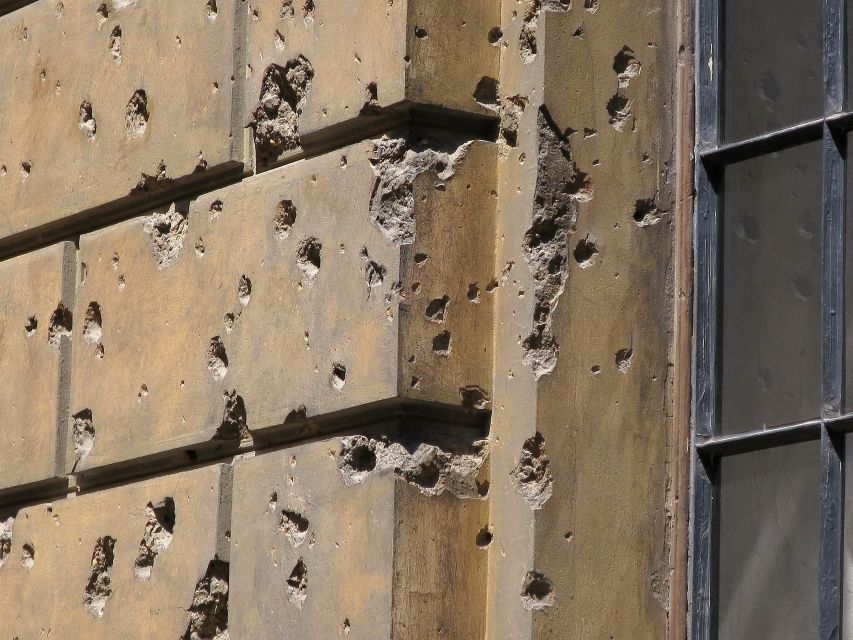
Meet your guide in front of the Memorial to the Victims of Nazi Terror at Morzinplatz 4 in Vienna’s first district. The location matters. The former Hotel Metropol once occupied this site, and in 1939 it became the headquarters of the Gestapo in Vienna.
That makes Morzinplatz more than a convenient meeting point. It gives the tour a clear starting question: how did a city known for music, coffeehouses, imperial ceremony, and civic life become part of Nazi Germany’s machinery of terror?
Your guide introduces the timeline of both world wars here, including the causes and consequences of each conflict. The connection between them is important. World War I brought the collapse of empires and the breakup of Austria-Hungary, while the unstable years that followed helped create the conditions for authoritarian politics, Austrofascism, and the rise of Nazi power.
The memorial itself is stark, and the subject matter is heavy. If you prefer a light sightseeing walk, this is not the right choice. If you want the city’s political story explained at the locations where it unfolded, the opening works very well.
More of the Vienna old town:
- Vienna Historic Center Small Group Walking Tour
★ 5.0 · 1,746 reviews - Vienna: Old Town Sightseeing Tour in a Vintage-Style E-Car
★ 4.5 · 1,107 reviews - Vienna: 30-Minute Fiaker Ride in the Old Town
★ 4.5 · 1,092 reviews
Following the road from Franz Ferdinand to Hitler’s Austria
A strong feature of this walk is its broad timeline. You do not begin with World War II in isolation. Instead, you learn how the assassination of Archduke Franz Ferdinand set off a chain of events that led to World War I, the fall of the Habsburg order, and a very different Austria.
The tour then moves toward the years between the wars. Your guide discusses Austrofascism and the political pressures that shaped Austria before the Nazi annexation. This is useful context because Austria’s position during the 1930s and 1940s was not a simple story of an innocent country suddenly occupied from outside.
The route also examines Adolf Hitler, Ernst Kaltenbrunner, and other Austrian Nazis. These names help place local decisions alongside the wider Nazi system. You will hear how propaganda and political control affected daily life in German-occupied Austria, not just what happened in military commands and government offices.
I find this local focus more helpful than a general war overview. You are not simply being told that Vienna was involved. You are shown how ideology, government, fear, and public life came together in the city.
Reading Vienna’s streets through the Holocaust Memorial and Remembrance Stones
The Holocaust section is one of the most important parts of the walk. You pass the Holocaust Memorial and several Remembrance Stones, bringing the story of Vienna’s Jewish citizens into the streets of the Old Town.
The memorials work because they interrupt the polished image of central Vienna. You may be walking among historic buildings and busy public spaces, then encounter a marker that points to a person, a family, or a community destroyed by persecution. The tour gives these sites meaning and explains the tragic fate of Jewish residents during the Nazi period.
This is also where the private format can help. You can ask your guide about how the Holocaust affected Vienna, how remembrance appears in the city today, or how the monuments differ in purpose. The exact balance depends on your guide and your questions, but the tour is designed to adapt to your interests.
Keep in mind that this is a walking history lesson, not a museum visit. The tour does not include an interior Holocaust museum or a long exhibit session. Its value comes from connecting visible memorials to the streets, buildings, and political centers around them.
Hofburg and Heldenplatz, from imperial power to modern memory
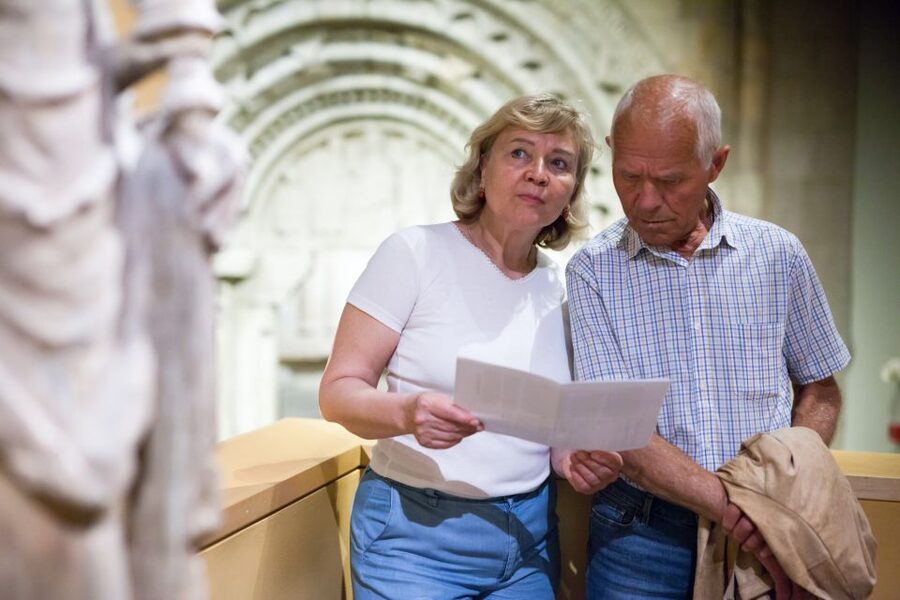
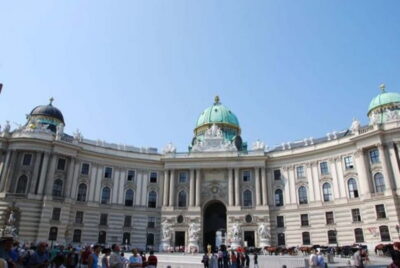
The route continues to the Hofburg palace complex, seen from the outside. The Hofburg is one of Vienna’s grandest symbols, but on this tour it is not treated only as a royal photo stop. Your guide uses the imperial center to explain the political world Austria inherited after the Habsburg monarchy and the changes that followed.
At Heldenplatz, you see the Memorial Crypt dedicated to victims of World War I and World War II. The site helps you think about the many ways Austria remembers war: military loss, civilian suffering, political responsibility, and national identity.
Heldenplatz is also a useful place to pause and consider the gap between ceremony and reality. Imperial buildings can make history feel distant and polished. The guide’s commentary brings the focus back to ordinary people, government decisions, propaganda, and the damage caused by war.
You will not tour the interior of Hofburg on this experience. That is an important distinction if you want palace rooms or museum collections. You are here for the exterior setting and its connection to Austria’s wartime story.
More walking tours in Vienna:
- Vienna: Guided Walking Tour of City Center Highlights
★ 4.7 · 4,989 reviews - Vienna: Vienna Central Cemetery Guided Walking Tour
★ 4.8 · 3,307 reviews - Vienna: Guided Walking Tour of City Highlights & Hidden Gems
★ 4.9 · 2,180 reviews - Vienna: Viennese Underworld Guided Walking Tour
★ 4.7 · 1,865 reviews
Burggarten and the monument to Emperor Franz Joseph I
The walk passes the monument to Emperor Franz Joseph I in Burggarten. He represents the long final chapter of Habsburg rule and helps connect the First World War to the older imperial order.
This stop is less about a single wartime event and more about political context. Franz Joseph ruled for decades, and his reign shaped the multinational empire that entered World War I. Seeing his monument during a World War tour gives you a reminder that conflicts grow out of systems and choices built over many years.
Burggarten also offers a change of pace from the more solemn memorials. On a hot day, a shady pause can make a real difference. One guide, Frau Heuberger, was praised for balancing explanation with breaks and moving from shade to shade during a period of intense heat. That kind of practical judgment matters on a walking tour, especially when the subject requires concentration.
Ending near the Vienna State Opera and the 1945 bombing
The tour ends at the Monument Against War and Fascism near the Vienna State Opera. The Opera itself was heavily damaged in the 1945 bombing, so the final stop brings the story back to the physical destruction of Vienna.
The monument gives the tour a clear closing point. You have moved from the Gestapo site, through political and imperial Vienna, past Holocaust remembrance, and finally to a public statement against war and fascism.
Ending here also leaves you in a useful part of the city. The Opera is close to major central sights, restaurants, and transport connections, although no onward arrangements are included. You can continue sightseeing on your own after the guide finishes.
The route is best understood as a connected walk, not a collection of isolated monuments. Each stop adds a piece: terror, ideology, imperial politics, persecution, destruction, and remembrance.
What two hours can, and cannot, cover
Two hours is enough for a focused introduction. You will see several major locations, learn the main timeline, and gain a clearer sense of Austria’s role in both world wars and the Holocaust.
It is not enough for every detail. You will not receive a full military account of the Eastern Front, an exhaustive biography of Hitler or Kaltenbrunner, or a complete survey of every wartime building in Vienna. The route favors central locations and a connected explanation.
That limit can be a strength. World War II history can become a blur of dates and names when too much is packed into one session. A private guide can adjust the emphasis, giving more attention to Austrian Nazism, Jewish history, wartime destruction, or the political story before 1939.
The pace also depends on your group. A private party of two or four can usually ask more questions than a group of 25. Larger private groups are allowed, but the experience will feel less personal. Groups above 25 people require additional guides and cost more.
Guide quality and the benefit of a private group
The tour includes a licensed guide fluent in your selected language. The listed choices are unusually broad: English, German, Italian, French, Spanish, Russian, Polish, Chinese, Japanese, Croatian, Portuguese, and Arabic.
Several guide names have received strong praise, including Peter, Sanda, Alexander, and Frau Heuberger. Peter was noted for detailed explanations and patience with a family traveling with a two-year-old. Sanda was described as professional, while Alexander received a short but clear endorsement. Frau Heuberger’s ability to adjust the walking rhythm during hot weather is a useful example of what a good private guide can add.
You should still think of those names as examples, not a promise that one specific person will lead your departure. The practical point is that the experience has been delivered by guides who can explain the material, answer questions, and adjust the pace.
The 1 to 25 people per guide limit is worth noting. A private booking does not always mean a tiny group. If you are booking for a school, extended family, or larger organization, confirm how many guides will be assigned and how the cost changes.
Is $214 per person a fair price?
At $214 per person, this is a premium walking tour. The value depends heavily on group size.
For a couple or a small family, the price buys a private two-hour lesson with a licensed guide, a route built around difficult subjects, and the chance to shape the conversation. That can be worthwhile if you want more than a general Old Town tour and do not want to study the history alone.
For a larger private party, the cost per person may feel more reasonable, but the personal feel can decrease as the group grows. For groups over 25, additional guides raise the price.
You are paying for interpretation rather than admission tickets. The walk does not include interior entry to Hofburg, a museum visit, transport, food, or other extras. I would choose it for the guide’s context and the careful route, not for the number of attractions checked off a list.
The flexible booking terms help reduce risk. You can cancel up to 24 hours in advance for a full refund, and you can reserve now and pay later. Check the day before for important information about your meeting arrangements.
Practical advice for making the walk comfortable
Wear comfortable shoes. The route stays on city streets and includes several stops, so footwear matters more than it might on a palace visit.
Dress for the weather. Vienna’s central streets can feel hot in direct sun, and the heat can make it harder to focus on serious material. Bring water and use pauses wisely, especially in summer.
Plan to arrive at Morzinplatz with enough time to find the memorial. The meeting point is Denkmal der Opfer des Faschismus at Morzinplatz 4, 1010 Wien, in the Old Town.
This is a history-focused walk, so prepare children and younger participants for difficult topics. A two-year-old can be accommodated with patience, as one family’s experience showed, but the content is designed for people who want to discuss war, fascism, persecution, and death.
Choose your language carefully at booking. The available range makes this suitable for many international groups, but the quality of the experience depends on being able to follow detailed political and historical explanations.
Who should book this Vienna war history tour?
I would choose this tour if you want the major wartime story tied to real places in central Vienna. It suits history-minded visitors, families with older children, students, and anyone who wants to understand Austria’s role rather than treat Vienna as only an imperial and artistic capital.
It is also a good choice if you have already seen the main sights and want a different way to read them. Hofburg, Heldenplatz, Burggarten, and the Opera area take on another meaning when connected to war, fascism, and remembrance.
I would skip it if you want a relaxed stroll with mostly architectural highlights. The content is serious, the pace is purposeful, and the two-hour format leaves little room for aimless wandering.
Should you book it?
Book this private walk if local wartime context matters more to you than interior sightseeing. The opening at the former Gestapo headquarters, the Holocaust memorials, the political history around Hofburg, and the bombing story near the Opera create a strong, coherent route.
The $214 price is easiest to justify for a small group that will ask questions and tailor the discussion. If you are mainly looking for a cheap overview, a larger group tour may offer better value. If you want a focused guide in your own language, with time to stop and ask about Austria’s difficult past, this is a thoughtful choice.
FAQ
How long does the World War II History Vienna Old Town Private Walking Tour last?
The tour lasts two hours.
Where does the tour meet?
Meet your guide in front of Denkmal der Opfer des Faschismus, the Memorial to the Victims of Nazi Terror, at Morzinplatz 4, 1010 Wien, Austria.
Where does the tour end?
The walk ends at the Monument Against War and Fascism near the Vienna State Opera.
Is this a private tour?
Yes. It is offered as a private group experience.
How many people can join one guide?
The group size is limited to 1 to 25 people per guide. Additional guides are arranged for larger groups, and the price is higher.
Which languages are available?
The listed languages are English, German, Italian, French, Spanish, Russian, Polish, Chinese, Japanese, Croatian, Portuguese, and Arabic.
Does the tour include entry to Hofburg?
No. Hofburg is viewed from the outside only.
What topics does the guide cover?
The tour covers World War I, World War II, the Holocaust, Austrofascism, Hitler’s annexation of Austria, Austrian Nazis including Ernst Kaltenbrunner, the bombing of Vienna, and the city’s liberation.
Can I cancel for a full refund?
Yes. You can cancel up to 24 hours in advance for a full refund. You can also reserve now and pay later.
More History Walks in Vienna
- Vienna: Time Travel and Magic Vienna History Tour
★ 4.6 · 3,879 reviews - Vienna: World War II Historical Walking Tour
★ 4.8 · 1,772 reviews - Time Travel-Magic Vienna History Tour Ticket
★ 4.5 · 1,099 reviews - Skip-the-Line Schonbrunn Palace Guided Tour and Vienna Historical City Tour
★ 3.5 · 940 reviews
Just added around Vienna
- Vienna: Johann Strauss 200th birthday anniversary exhibition★ 4.7 · 3 reviews
- Vienna Private Full Day Tour – Tickets to Schönbrunn & Lunch★ 5.0 · 3 reviews
- Private Tour from Vienna to Melk and Dürnstein★ 4.5 · 3 reviews
- Private Salzburg Day Trip from Vienna★ 4.0 · 3 reviews
- Vienna: Entry Ticket Belvedere 21 & Contemporary Art★ 4.3 · 3 reviews
- Full-Day Private Trip from Vienna to Budapest★ 4.5 · 3 reviews
- Vienna by Night: Private Evening Food and Drink Tour★ 5.0 · 3 reviews
- 1.5 Hour Cinematic Style Portrait Photoshoot and Tour in Vienna★ 4.5 · 3 reviews
Historical Tours, compared.
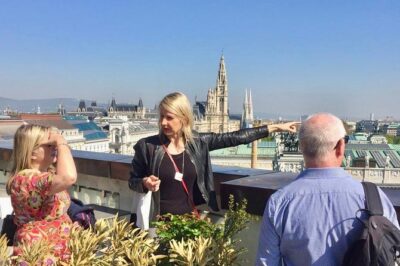
Vienna Historic Center Small Group Walking Tour
Read our review →
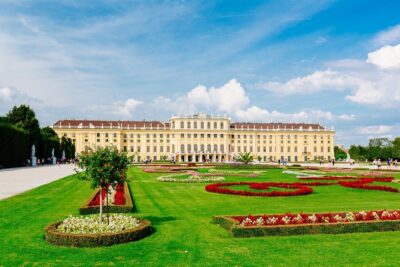
Skip-the-Line Schonbrunn Palace Guided Tour and Vienna Historical City Tour
Read our review →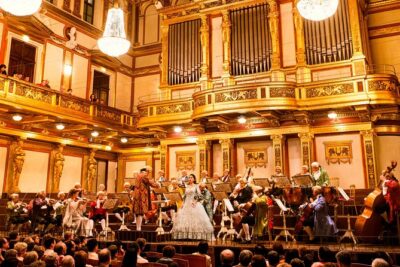
Vienna Mozart Concert in Historical Costumes at the Musikverein
Read our review →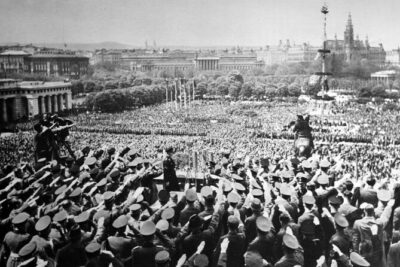
Browse the lists this tour appears in